 English
 Español




Construction, machinery, seams and product applications
Sock Manufacturing Knowledge
What Are Flat Knit Socks and How Are They Manufactured?
Flat knit socks are produced as flat fabric pieces rather than being knitted continuously in a circular tube. The knitted components are shaped, linked or sewn together to create the finished sock. This method gives manufacturers greater control over panel shape, compression zones, decorative structures, material placement and size development.
What Is a Flat Knit Sock?
A flat knit sock is formed from fabric knitted back and forth across needle beds. The knitting process creates a flat or shaped panel instead of a seamless cylindrical tube. Once the required length and shape are completed, the fabric edges are connected by linking, seaming or another joining method.
The term does not mean that every finished sock looks visibly flat. It describes the knitting method used before assembly. Depending on machine capability and product design, the panel may include shaped heels, tapered legs, reinforced toes, ribs, mesh zones or different levels of elasticity.
Knitting Question
Can You Knit Socks Not in the Round?
Yes. Socks can be knitted without circular needles or circular knitting equipment. A maker can knit socks flat using two straight needles, while industrial production can use a flat bed knitting machine. The fabric is worked in rows and then joined along a selected seam line.
The seam may be positioned under the foot, along the side, behind the leg or in another location chosen according to the pattern. Seam placement affects appearance, pressure distribution and wearing comfort.
Practical Answer
Can You Knit Socks Flat?
The answer to can you knit socks flat is also yes. Flat construction is useful for shaped products, low-volume special designs, compression panels and patterns that require controlled changes in width.
A flat construction method can also be suitable when the available equipment does not support circular knitting. The final quality depends on accurate shaping and a smooth joining technique.
01
Flat Knit Socks Versus Circular Knit Socks
Both methods can produce functional and attractive socks. The most appropriate process depends on structure, required pressure, production volume, seam expectations and design complexity.
| Comparison Point | Flat Knit Construction | Circular Knit Construction |
|---|---|---|
| Fabric formation | Knitted back and forth as an open or shaped panel | Knitted continuously as a tubular structure |
| Assembly | Usually requires a seam or linked edge | Main body is tubular, although toe closing is still required |
| Shape control | High flexibility for width changes and panel shaping | Efficient for standard cylindrical sock forms |
| Compression zoning | Suitable for precisely planned support areas | Suitable for many regular graduated compression products |
| Decorative development | Supports structured panels, ribs and engineered surfaces | Supports jacquard, terry, mesh and standard sock patterns |
| Production efficiency | Depends heavily on panel complexity and joining work | Often efficient for high-volume standard sock production |
| Seam consideration | Seam design is a major product development factor | Body seam is normally avoided, but the toe still needs closing |
02
How to Knit Socks Flat in Industrial Production
The industrial process for knit flat socks begins with a technical drawing, size specification and stitch plan. Each stage influences the fit and stability of the finished sock.
Product Specification
Foot length, leg height, ankle width, cuff stretch, heel shape and toe shape are confirmed before programming.
Yarn Selection
Yarn type is chosen according to softness, elasticity, warmth, compression performance and intended appearance.
Machine Programming
Needle selection, stitch density, transfer movements and shaping points are entered into the machine program.
Panel Knitting
The machine knits each row across the needle bed and changes the active needle count where shaping is required.
Linking or Seaming
The panel edges are joined with controlled tension to reduce bulk and maintain the planned dimensions.
Shaping and Inspection
Finished socks are shaped, measured and checked for seam quality, symmetry and stretch recovery.
03
Can You Knit Socks on a Flat Bed Knitting Machine?
A flat bed knitting machine can produce socks or sock components when the machine gauge, needle arrangement and programming system are suitable for the required construction. The machine uses one or two needle beds and moves yarn carriers across the bed while selected needles form stitches.
Modern equipment may support rib structures, stitch transfer, narrowing, widening, partial knitting and multiple yarn carriers. These capabilities allow a manufacturer to develop shaped cuffs, reinforced zones, engineered compression areas and decorative textures.
How to Knit Socks Flat with Straight Needles
The phrase how to knit socks flat with straight needles usually refers to a hand-knitting method rather than industrial manufacturing. The sock is worked in rows on two straight needles. Depending on the pattern, the knitter may start from the cuff, toe or side.
A typical flat sock pattern includes a ribbed cuff, leg panel, shaped heel, foot section and toe. Increases and decreases create the required dimensions. The finished piece is seamed after the knitting stage.
04
Common Product Categories Made with Flat Knitting
Flat knitting can serve different product categories when the structure is adjusted for elasticity, appearance and wearing purpose.
Flat Knit Compression Socks
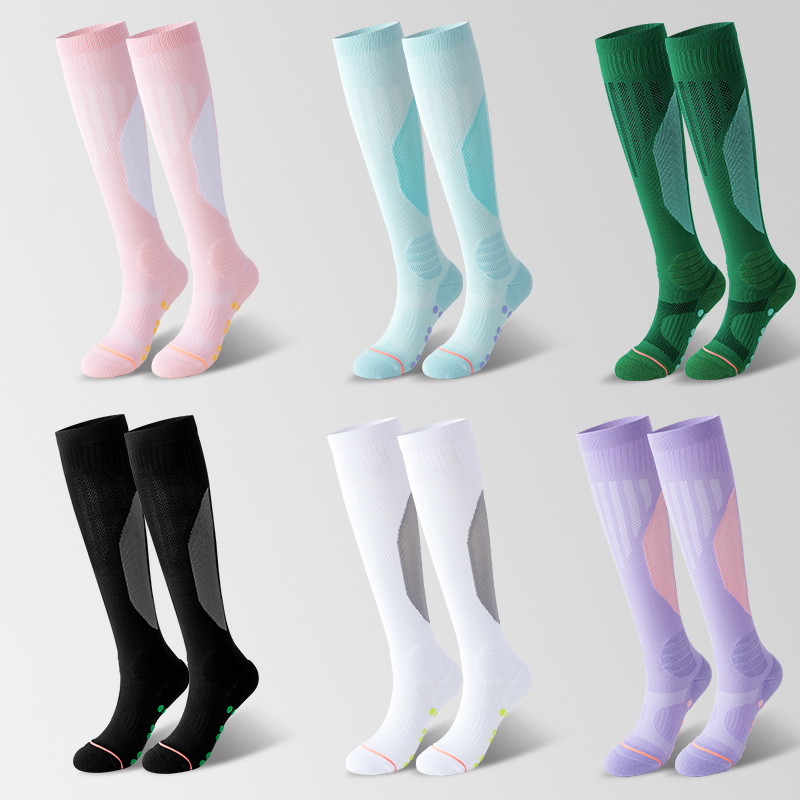
Flat knit compression socks use controlled stitch density and elastic yarn placement to create planned support zones. The structure can be engineered around the ankle, calf and upper leg dimensions.
Seam position, pressure consistency and dimensional stability require careful testing. Compression performance should be evaluated according to the intended product specification.
Flat Knit Dress Socks
Flat knit dress socks may use fine yarns, smooth surfaces and controlled rib structures for a refined appearance. The method is suitable for decorative panels, engineered stripes and special cuff treatments.
A dress sock should maintain a low-profile seam and balanced stretch so that the fabric lies smoothly inside formal footwear.
Special Craft Socks
Special craft designs can include unusual silhouettes, textured surfaces, panel-based color arrangements or decorative knitted elements that are difficult to achieve with a standard tubular construction.
Product development may involve multiple samples to balance appearance, seam placement and dimensional stability.
05
Key Considerations for Flat Knit Compression Socks
Pressure Distribution
Compression zones need controlled elasticity and consistent stitch formation. Uneven density may create unwanted pressure differences.
Accurate Measurements
Ankle, calf, leg and foot dimensions influence pattern grading. A single length measurement is not sufficient for a shaped compression product.
Seam Location
The seam should be positioned and finished to reduce concentrated pressure and friction during prolonged wear.
Elastic Yarn Recovery
Elastic yarn must recover after stretching and repeated washing so that the sock continues to follow the intended dimensions.
Cuff Stability
The upper edge should remain secure without rolling or creating an excessively narrow pressure band.
Wash Performance
Size, elasticity, color and seam condition should be checked after washing under the recommended care conditions.
How Yarn Selection Changes Flat Knit Sock Performance
Provides a familiar hand feel and moisture absorption for dress, casual and daily-wear applications.
Comfort-focusedSupport warmth, softness and temperature management in cold-weather constructions.
Thermal-focusedImproves abrasion resistance, dimensional stability and surface durability in reinforced zones.
Durability-focusedSupports stretch recovery, cuff stability and compression performance when used in controlled proportions.
Recovery-focusedHelps create a smooth appearance, light structure and refined surface for flat knit dress socks.
Appearance-focused06
Quality Control for Knit Flat Socks
Inspection should cover more than finished appearance. Flat knitted products depend on accurate panel dimensions and consistent joining.
Panel Measurement
Length, width, heel depth and shaping points are compared with the approved specification.
Seam Inspection
Seams are examined for bulk, skipped stitches, broken yarn and uneven tension.
Pair Matching
Left and right components are checked for size, pattern position and color consistency.
Stretch Recovery
Cuffs and elastic zones are stretched and evaluated for return performance.
Wash Testing
Dimensional change, color stability and surface condition are reviewed after washing.
Final Finishing
Loose yarn ends, labels, folding and packaging are checked before shipment preparation.
Manufacturer Development Options
How Can a Flat Knit Sock Collection Be Customized?
A flat knit collection can be developed according to yarn composition, knitting gauge, compression level, seam position, cuff structure, foot length, leg shape, color arrangement and packaging format. Technical communication should begin with the wearing purpose and required dimensions.
Confirm construction, measurements and seam location.
Evaluate fit, stretch, pressure and internal comfort.
Finalize yarn, colors, labels and packaging details.
07
Frequently Asked Questions About Flat Knit Socks
Clear answers to common technical and product questions about flat sock construction.
What are flat knit socks?
Flat knit socks are made from fabric knitted in back-and-forth rows. The fabric is shaped as an open panel and later joined to form the finished sock.
Can you knit socks not in the round?
Yes. Socks can be knitted flat with straight needles or produced as shaped panels on a flat bed knitting machine.
Can you knit socks flat?
Yes. Flat knitting is suitable for handmade socks, engineered compression products, decorative panels and special craft constructions.
How to knit socks flat?
Knit the cuff, leg, heel, foot and toe in rows according to a shaped pattern. The panel edges are joined after knitting.
How to knit socks flat with straight needles?
Use two straight needles and a pattern designed for row knitting. Increases, decreases and short rows form the heel and toe before the sock is seamed.
Can you knit socks on a flat bed knitting machine?
Yes, provided the machine gauge, needle configuration and programming functions support the required yarn, size and shaping method.
Do flat knit socks always have a visible seam?
They normally require a joining area, but careful linking, fine yarn and appropriate seam placement can make the seam less noticeable.
Are flat knit compression socks different from regular socks?
They may use more precise sizing, engineered elasticity and controlled support zones. Their construction and testing requirements are usually more demanding than standard casual socks.