 English
 Español




Baby Footwear Guide
How Do You Choose Baby Socks That Stay On and Feel Comfortable?
Choosing the right baby socks involves more than selecting a color or pattern. Fit, cuff construction, yarn softness, toe-seam quality and seasonal thickness all affect how comfortably a sock stays on a baby's foot. A well-designed pair should provide gentle coverage without restricting natural toe movement or leaving deep marks around the ankle.
Quick Answer
Do babies need socks?
Babies may benefit from socks when their feet are exposed to cool air, rough surfaces or friction from clothing. Socks are not required in every indoor setting. Room temperature, clothing layers and the baby's comfort should guide the decision.
01
What Makes Baby Socks Comfortable?
Comfort is created by the combined performance of the yarn, knitting density, elasticity and internal finishing. A soft-looking sock can still feel uncomfortable when the cuff is narrow, the toe seam is bulky or loose threads remain inside.
Gentle Cuff Pressure
A wider ribbed cuff distributes pressure across a larger area. It helps the sock remain in position without depending on a tight elastic band.
Room for Toe Movement
The toe area should allow the toes to spread and move naturally. A sock that is too short may compress the toes even when the ankle opening appears suitable.
Smooth Internal Surface
Flat linking, controlled yarn ends and neat finishing reduce friction against delicate skin. The inner surface should be checked as carefully as the outside appearance.
Balanced Stretch Recovery
The fabric should expand during dressing and return close to its original shape afterward. Weak recovery causes slipping, while excessive recovery may create pressure marks.
02
How Do Baby Socks That Stay On Actually Work?
The phrase baby socks that stay on usually describes socks designed to resist slipping during kicking, crawling, carrying and daily movement. Reliable stay-on performance comes from proportion and structure rather than an extremely tight cuff.
Correct Cuff Width
A stable cuff should follow the ankle without rolling, folding or creating a narrow pressure line.
Defined Heel Position
A shaped heel helps prevent rotation. When the heel pocket is too shallow or too large, the sock may twist toward the top of the foot.
Appropriate Leg Height
Mid-calf styles often remain more stable than very low-cut styles during active leg movement. The leg section should still be soft and easy to stretch.
Accurate Size Grading
Age labels are useful references, but actual foot length provides a more reliable fit. Size grading should account for both length growth and ankle circumference.
03
Should Babies Wear Socks in Every Situation?
The answer to should babies wear socks depends on temperature, activity and the clothing already covering the feet. Socks should provide useful protection rather than unnecessary extra warmth.
| Situation | Suggested Sock Type | Important Detail | Common Mistake |
|---|---|---|---|
| Cool indoor room | Lightweight cotton-rich socks | Check the neck or chest rather than judging only by cool hands and feet | Adding thick socks while the baby already wears footed clothing |
| Outdoor stroller use | Mid-weight socks with a secure cuff | Match thickness to the full outfit and weather conditions | Using an overly tight cuff to prevent loss |
| Crawling stage | Durable socks with reinforced heel and toe | Choose smooth internal construction and good stretch recovery | Selecting socks that become twisted during movement |
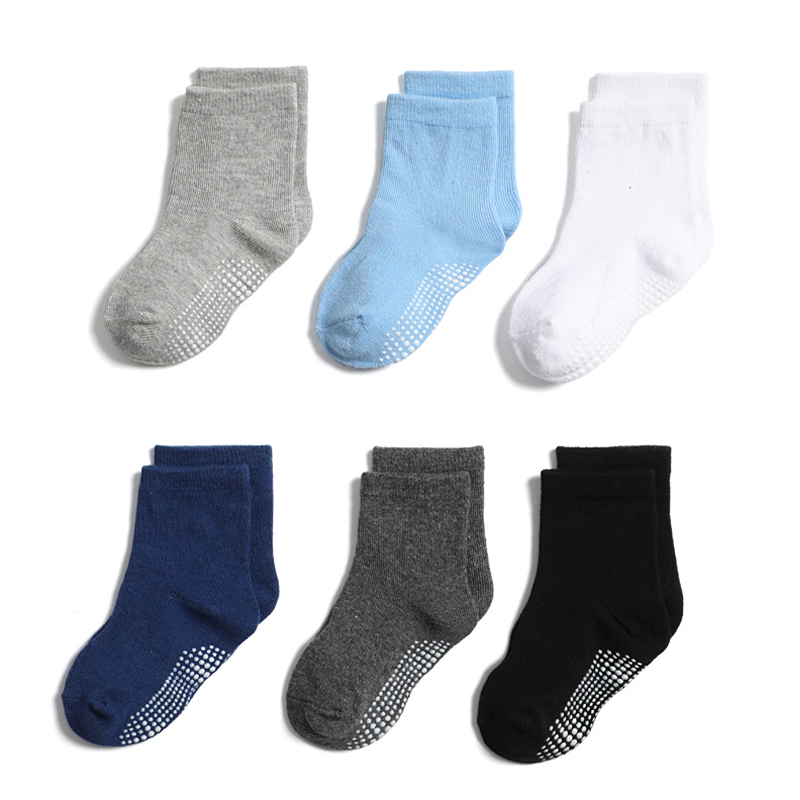
| Early walking stage | Non-slip socks with correctly positioned grip areas | Grip material should sit under the heel and forefoot | Using oversized socks that allow the grip pattern to move |
| Warm indoor environment | Very light socks or uncovered feet | Keep the feet dry and avoid unnecessary layering | Continuing to use thick thermal socks despite sweating |
Common Parent Question
Should Babies Sleep with Socks On?
Babies can sleep in lightweight socks when the room is cool and their sleepwear does not cover the feet. Socks may be unnecessary when the baby is already wearing footed pajamas or an appropriately selected sleep garment. The complete clothing combination matters more than the socks alone.
Sleep socks should be breathable, properly sized and free from loose decorations. The cuff should not leave a deep mark, and the inside should not contain long floating threads that could wrap around a toe.
Sleep Sock Check
The heel remains aligned and the toes are not compressed.
The sock complements the sleepwear instead of creating excessive layering.
No beads, bows, cords, loose labels or detachable decorations are used.
The sock is dry, clean and free from damaged elastic or exposed yarn ends.
04
How Should Baby Girl Socks Balance Style and Function?
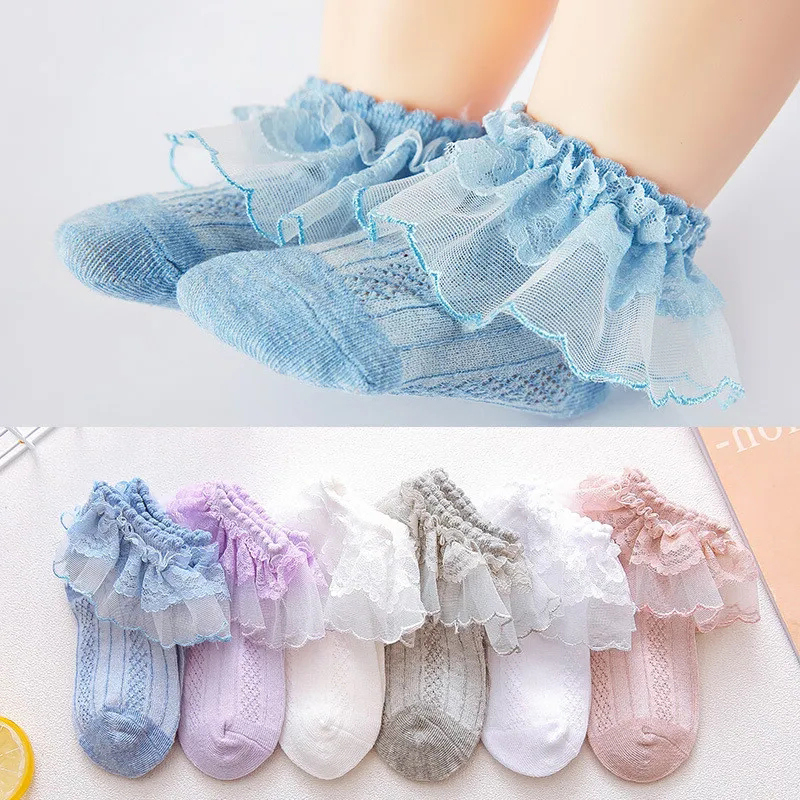
Baby girl socks may use pastel colors, jacquard patterns, scalloped cuffs, lace effects or small decorative details. Visual design should never reduce elasticity, wash durability or wearing comfort.
Daily Essential
Minimal Pattern Socks
Soft colors and knitted patterns create a clean appearance without relying on detachable components.
Decorative Option
Scalloped Cuff Socks
A shaped knitted cuff can provide a decorative finish while preserving stretch and simplifying washing.
Gift Collection
Coordinated Color Sets
Multiple colors can be developed within one yarn and size specification, supporting coordinated seasonal collections.
05
Yarn, Thickness and Construction Options
The fiber label is only one part of sock performance. Yarn count, knitting tension, elastic placement and finishing method determine how the sock feels after repeated washing and wearing.
Cotton-Rich Knit
Suitable for daily wear where softness, moisture absorption and familiar hand feel are important.
Combed Yarn Structure
A smoother yarn surface can reduce loose fibers and support a cleaner, more refined appearance.
Terry Cushion Knit
Looped internal cushioning adds warmth and softness for cooler conditions without requiring a rigid fabric structure.
Non-Slip Sole Design
Grip printing can support traction during standing and early walking when positioned under the main pressure areas.
06
How Baby Sock Quality Is Evaluated During Production
Consistent manufacturing requires more than visual inspection. Each stage should control fit, appearance and performance so that socks from different production batches follow the same specification.
Yarn Confirmation
Yarn composition, color, texture and batch consistency are checked before knitting begins.
Knitting Control
Stitch density, cuff elasticity, heel depth and foot length are monitored according to the size specification.
Toe Linking
Toe seams are examined for bulk, uneven tension and hard yarn ends that may affect comfort.
Shaping and Finishing
Socks are shaped to support dimensional consistency while avoiding excessive heat or pressure.
Measurement Inspection
Foot length, leg height, cuff width and stretch range are compared with the approved sample.
Packaging Review
Pair matching, labeling, folding, color assortment and packaging details are checked before shipment preparation.
07
Product Development Options for Baby Sock Collections
A baby sock range can be developed around age group, season, yarn structure, cuff style, pattern and packaging format. Clear specifications help maintain consistent appearance and sizing across multiple designs.
Size Development
Foot length, cuff circumference, heel depth and leg height can be graded for newborn, infant, crawler and early walker stages.
Color and Pattern
Solid colors, stripes, dots, jacquard artwork, lettering and seasonal themes can be coordinated within one collection.
Cuff Construction
Standard rib, roll cuff, scalloped cuff and extended stay-on structures can be selected according to the intended style.
Functional Details
Reinforced heels, reinforced toes, terry cushioning and non-slip printing can be added for specific wearing stages.
Packaging Format
Single-pair, multipair, color-set and gift-ready packaging can be developed with coordinated labels and product information.
Sample Verification
Fit, stretch recovery, wash appearance, color matching and decorative placement can be confirmed through sample review before production.
08
Frequently Asked Questions About Baby Socks
These concise answers address common search questions while helping readers identify the most suitable construction for different stages of use.
Do babies need socks indoors?
Babies do not always need socks indoors. Lightweight socks may be useful when the floor or room feels cool and the baby's clothing leaves the feet uncovered. In a warm room, uncovered feet may be more comfortable.
Should babies wear socks under footed pajamas?
Extra socks are usually unnecessary when footed pajamas already provide appropriate coverage. Adding another layer may create excess warmth or make the foot area feel tight.
Why do baby socks keep falling off?
Socks commonly fall off because the size is too large, the cuff recovery is weak, the heel pocket does not match the foot or the leg section is too short for active movement.
What are the best baby socks that stay on?
Effective stay-on socks normally combine a wide flexible cuff, defined heel, correctly graded foot length and stable stretch recovery. A tighter cuff alone does not guarantee better performance.
Should babies sleep with socks on?
Lightweight socks can be used in a cool room when sleepwear does not cover the feet. The full sleep outfit should remain breathable, comfortable and appropriate for the room temperature.
How to make a sock baby?
How to make a sock baby usually refers to creating a decorative doll from a clean sock and soft filling. Small buttons, beads, loose ribbons and detachable pieces should not be used when the item may be handled by an infant. A handmade sock doll should not be placed in an infant sleep area.
How often should baby socks be replaced?
Replace socks when the cuff loses recovery, the fabric becomes rough, the size restricts the toes, the sole becomes thin or internal threads and seams become damaged.
Develop a Practical Baby Sock Range
Choose the Right Fit, Knit and Finish for Each Wearing Stage
Product specifications can be adjusted around age range, yarn composition, seasonal weight, stay-on cuff structure, non-slip placement, color assortment and packaging presentation. A clear sample approval process helps maintain consistent sizing and appearance across the complete collection.