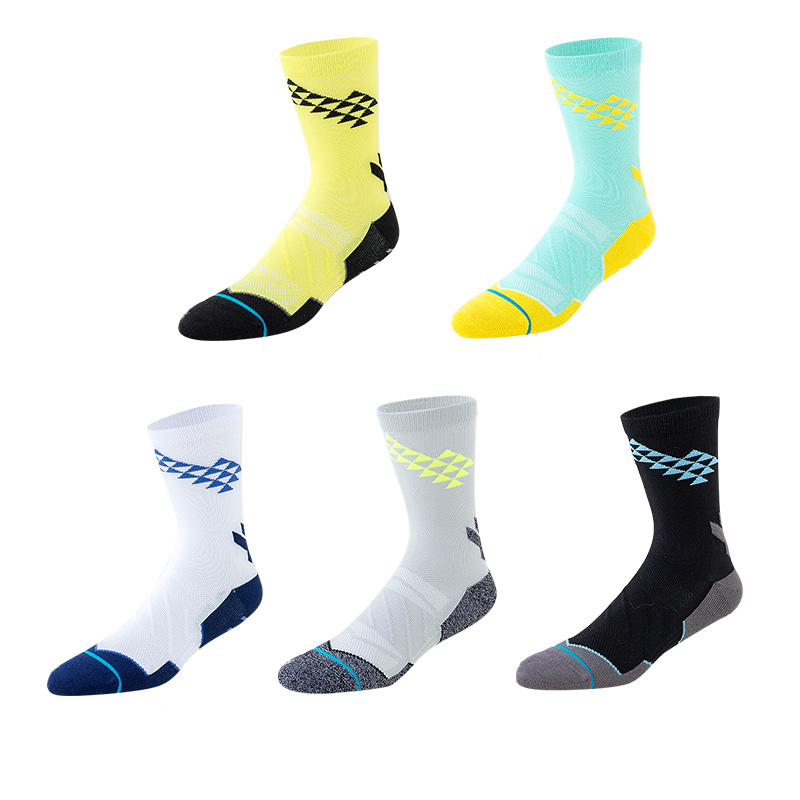
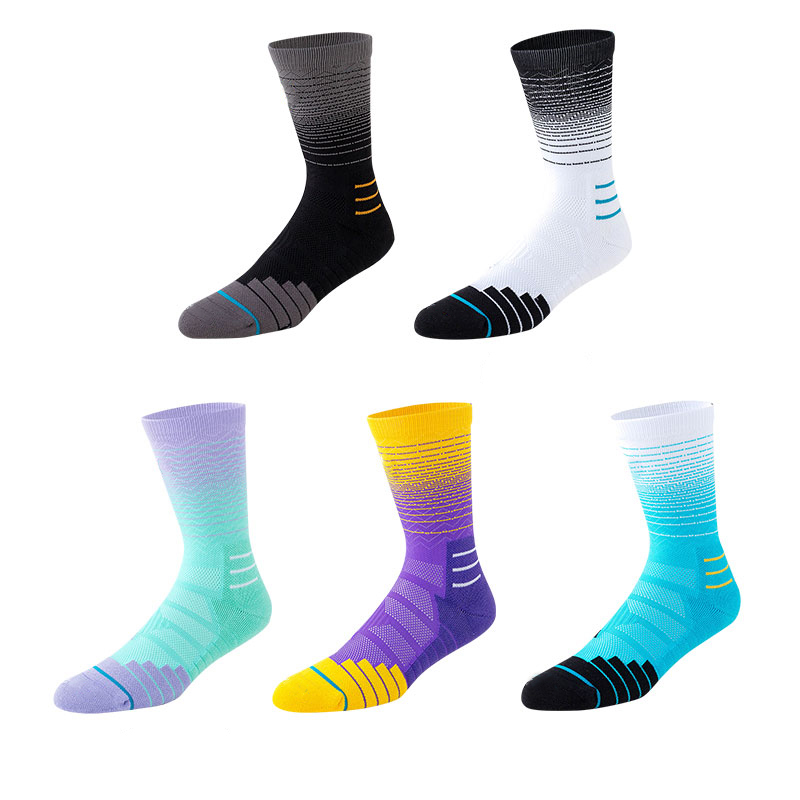
Textile Engineering Notes
Inside the Construction of Double-Layer Socks: Fiber, Fit, and Field Performance
A sock that carries two knitted shells instead of one is not simply "thicker." The inner shell and outer shell are knitted as separate structures, joined only at fixed anchor points, so the two layers can move independently of one another once the foot is loaded inside a shoe or boot. This mechanical detail is what separates a genuine Double-Layer Socks construction from simply pulling on two ordinary pairs at once — and it is the starting point for understanding how this category behaves across running, hiking, work footwear, and cold-weather use.
How the Two-Shell Structure Is Built
Production begins on circular knitting machines capable of feeding two separate yarn systems into the same tube. Rather than knitting one continuous wall of fabric, the machine produces an inner tube and an outer tube in the same pass, connecting them only at the cuff opening and at a narrow band close to the toe closure. Everywhere else along the foot and leg, the two shells are free-floating relative to each other.
That free-floating zone matters mechanically. When the foot flexes during a heel strike, a lateral cutting motion, or repeated boot flex on a lift line, the inner shell tracks the movement of the skin while the outer shell tracks the movement of the footwear lining. The sliding motion that would otherwise occur directly against the epidermis is redirected to the space between the two knitted layers. Toe closure method plays a supporting role here: a hand-linked or seamless toe finish keeps the seam ridge low and flat, which matters more once a second fabric layer already adds bulk to the toe box.
Three production variables decide how well this works in practice. Knitting gauge — the needle count per inch — controls how much room exists between the shells; too tight a gauge limits interlayer movement and quietly cancels out the anti-friction benefit, while too loose a gauge invites bunching inside a snug shoe. Yarn denier affects how much the inner shell stretches under load. And the tension differential set between the inner and outer feed systems determines whether the sock returns to shape after repeated flexion or gradually loosens at the ankle.
There is also a break-in consideration that gets overlooked. A newly knitted double-layer sock arrives from production with the two shells held slightly closer together than they will sit after a handful of wear-and-wash cycles. The anchor points at the cuff and toe do not change, but the free-floating fabric between them relaxes and gains a small amount of additional give. This is one reason a double-layer sock sometimes feels marginally firmer during the first few wears than it does after it has been laundered several times — the interlayer sliding motion the construction depends on becomes more available once the fabric has relaxed into its working shape.
Anchor point placement is a design decision as much as a manufacturing one. Joining the two shells only at the very top of the cuff, rather than adding a secondary anchor partway down the leg, maximizes the length of free-floating fabric and therefore the amount of interlayer movement available. Some constructions intentionally add a light secondary anchor around the ankle to prevent the outer shell from twisting during lateral movement, trading a small amount of sliding range for added stability — a relevant distinction for footwear involving sharp direction changes rather than straight-line movement.
Fiber Composition by Layer
Inner and outer shells are rarely built from the same fiber blend, because each layer is solving a different problem. The inner shell sits against skin and is optimized for low friction and fast moisture transfer; the outer shell sits against the footwear lining and is optimized for abrasion resistance and shape retention.
Inner Shell
Fine-Denier Polyester
Low surface friction against skin, rapid moisture transfer to the outer shell, quick dry time. Common choice for warm-weather and long-distance running applications.
Inner Shell
Fine Merino Wool Blend
Higher moisture regain than synthetics, natural odor resistance, softer hand feel against skin. Slower dry time but stronger thermal buffering in cold conditions.
Outer Shell
Cotton-Nylon Blend
Absorbs moisture pushed out from the inner layer, higher abrasion resistance against footwear lining, stable shape under repeated wear cycles.
Outer Shell
Wool-Nylon Blend
Higher warmth retention per gram, used in cold-weather and winter footwear applications where insulation matters as much as friction control.
Structural
Spandex / Elastane Content
Controls arch compression band retention and cuff hold. Percentage typically ranges from 3% to 8% depending on compression target.
Structural
Reinforced Heel and Toe Yarn
Heavier-denier yarn plated into the highest-wear zones, extending fabric life in the areas that contact footwear first.
Single-Layer, Double-Layer, and Triple-Layer: Parameter Comparison
Layer count is not a marketing distinction — it changes measurable behavior at the foot-sock-shoe interface. The table below lines up the three common constructions against the same set of physical parameters.
| Parameter |
Single-Layer |
Double-Layer |
Triple-Layer |
| Friction transferred to skin |
High |
Low |
Very Low |
| Moisture transfer speed |
Moderate |
Fast (layer-to-layer) |
Slower (more material to saturate) |
| Bulk inside footwear |
Minimal |
Moderate |
Significant |
| Break-in period for new footwear |
Short |
Short to Moderate |
Longer, fit-dependent |
| Blister risk on repetitive motion |
Elevated |
Reduced |
Reduced, with fit trade-offs |
| Warmth retention index |
Baseline |
Above baseline |
Highest |
| Recommended footwear fit |
Snug to true-to-size |
True-to-size or slightly roomier |
Roomier fit required |
Values reflect typical construction behavior and vary by yarn blend, knitting gauge, and footwear volume.
Footwear Volume: The Variable That Determines Whether Double-Layer Helps or Hurts
The single most common mistake in choosing between single-layer and double-layer construction is treating it as a foot decision rather than a foot-plus-footwear decision. A double-layer sock needs a small amount of spare internal volume to work as intended — enough space for the outer shell to shift slightly against the lining without the whole assembly being compressed flat.
In footwear that already fits close to the edge of available volume — a running shoe sized for a single thin sock, or a dress shoe with minimal internal clearance — adding a double-layer sock can remove the exact amount of movement room the construction depends on. The two shells get pressed together by the tightness of the shoe, friction transfers through to the skin much as it would in a single-layer sock, and the only change is added bulk and heat. This is why fit-checking footwear volume before switching sock categories matters more than the sock choice itself in borderline cases.
A simple way to check compatibility without specialized equipment: lace footwear normally with the intended sock, then check whether the toe box still allows a small amount of forward wiggle room and whether the heel stays seated without the laces needing to be pulled unusually tight. If either check fails, going up half a size in footwear — rather than reverting to a single-layer sock — is usually the more durable fix, since it preserves the friction-reduction benefit rather than trading it away.
Anatomical Cushioning Zones
Not every part of the foot needs the same treatment. Double-layer construction is typically concentrated where repetitive load actually occurs, rather than applied uniformly across the entire sock — a distinction that also keeps overall bulk manageable.
Heel Counter
Reinforced double-layer padding at the point of initial ground contact, where shear force peaks during heel strike.
Forefoot and Metatarsal Band
The zone most relevant to running and load-bearing work, where the double-layer running sock category concentrates its extra cushioning during toe-off.
Arch Compression Band
A single-layer elastic band that holds the sock in place along the midfoot, preventing the outer shell from twisting independently of the shoe.
Achilles Tab
Light padding above the heel counter to reduce direct contact with a rigid boot collar or heel lock.
Toe Box
Reinforced toe closure paired with the second shell to manage the friction generated at the toe seam during forward flex.
Cuff and Leg Opening
The point where the two shells are mechanically joined, holding the sock in position without a separate top band.
Testing Standards Applied Before Production Approval
Because the anti-friction claim of a double-layer sock depends on the interlayer relationship holding up over time, testing focuses as much on durability after repeated use as on initial fit.
| Test |
What It Measures |
Typical Benchmark |
| Martindale Abrasion |
Fabric wear resistance under repeated rubbing |
20,000+ cycles before visible pilling |
| Colorfastness (wash and rub) |
Dye stability after laundering and friction |
Grade 4 or higher |
| Compression Retention |
Elastic recovery of the arch band after wash cycles |
Above 85% after 30 washes |
| Seam Tensile Strength |
Toe closure resistance to pulling and stretching |
Meets or exceeds body fabric strength |
| Moisture Transfer Rate |
Speed of moisture movement from inner to outer shell |
Measured under controlled humidity testing |
A construction that passes these five checks individually still needs to be evaluated as a system, because the interaction between tests matters more than any single result. A sock that scores well on abrasion resistance but poorly on compression retention will start out performing correctly and then gradually lose the arch hold that keeps the anchor points in the right position, which in turn changes how much interlayer sliding is available after a few months of use. Production batches are typically evaluated after a simulated wear cycle — repeated wash-dry sequences combined with mechanical flexing — rather than only in their as-manufactured state, since the as-manufactured state is not what a wearer experiences for most of the product's usable life.
Moisture Management and Odor Control Between the Two Shells
Moisture handling in a double-layer construction works differently from a single-layer sock, and this difference has secondary effects on odor that are worth understanding separately from the friction-reduction benefit. In a single-layer sock, moisture generated at the skin has to move through one fabric wall before it can evaporate or be absorbed by footwear. In a double-layer sock, moisture crosses the inner shell first, then sits in the gap between the two layers before crossing the outer shell — effectively splitting one transfer step into two.
This staged transfer has a practical benefit: skin contact time with damp fabric is generally shorter, since the inner shell only needs to move moisture across the gap rather than fully out of the sock. It also means the fiber blend chosen for the inner shell has an outsized effect on how dry the foot feels during activity, independent of how absorbent the outer shell is. A fast-wicking synthetic inner paired with a more absorbent outer shell tends to keep the skin-contact layer drier than either fiber would manage on its own in a single-layer construction.
Odor control follows a similar logic. Bacteria responsible for sock odor thrive in warm, consistently damp conditions, so anything that shortens the time skin spends in contact with saturated fabric reduces the conditions bacteria need to multiply. Wool-blend inner shells add a secondary effect here, since wool fiber has natural odor-resistant properties independent of moisture transfer speed — one reason wool-blend inner shells are common in multi-day hiking and travel-oriented double-layer socks where laundering access is limited.
Matching Construction to Activity
The same two-shell principle produces different results depending on footwear type, session length, and climate. The following breakdown separates the category by actual use case rather than treating it as one uniform product.
Long-Distance Running
This is where the double layer running sock category originated. Sessions beyond roughly ten kilometers accumulate thousands of repetitive foot-strikes, and the forefoot and heel absorb concentrated shear with every one of them. Concentrating the second shell at those two zones, rather than across the entire sock, keeps weight low while addressing the areas most exposed to blister formation.
Hiking and Trekking
Multi-hour movement over uneven terrain, combined with a loaded pack, increases vertical pressure through the heel and forefoot. A double-layer construction paired with a slightly roomier boot fit gives the interlayer sliding motion room to work, which matters more on descents than on flat ground.
Work and Safety Footwear
Steel-toe and composite-toe boots are typically built with less internal volume than athletic footwear, and shifts often run eight to twelve hours on hard flooring. A double-layer sock concentrated at the heel and ball of the foot reduces cumulative friction across a long shift without requiring a boot size change.
Cold Weather and Alpine Use
Ski and snowboard boots already have a rigid, closely molded liner, so the friction-reduction logic that helps in a running shoe does not transfer directly. Stacking two separate full-length socks inside a ski boot compresses circulation and often makes feet colder rather than more comfortable. A sock purpose-built with a low-profile double-layer zone at the heel and shin, rather than uniform doubled thickness, tends to perform better here than layering two unrelated pairs.
Everyday and Travel Wear
Outside of sport-specific use, a lighter double-layer construction at the heel alone is often enough to address friction from stiff new shoes or long days on hard flooring, without the bulk of a full athletic version.
Sizing Reference
Because the outer shell needs a small amount of footwear volume to move against, sizing runs slightly differently from a single-layer sock. The table below maps foot length to recommended size band. Where foot length falls near the boundary between two bands, the surrounding footwear volume — checked using the wiggle-room method described above — is usually the better tiebreaker than foot length alone.
| Foot Length |
US Size (Approx.) |
EU Size (Approx.) |
Recommended Fit |
| 22.5 – 24.0 cm |
5 – 7 |
36 – 38 |
True-to-size |
| 24.0 – 26.0 cm |
7.5 – 9.5 |
39 – 41 |
True-to-size |
| 26.0 – 28.0 cm |
10 – 12 |
42 – 44 |
True-to-size or half size up in narrow footwear |
| 28.0 – 30.0 cm |
12.5 – 14 |
45 – 47 |
Half size up recommended for double-layer bulk |
Care Instructions
WashingMachine wash cold, inside out, to protect the outer shell abrasion finish and reduce pilling at contact points.
DryingAir dry or low-heat tumble dry. High heat degrades elastane content faster, reducing arch band retention over time.
Fabric SoftenerAvoid fabric softener on the inner shell — it coats moisture-wicking fibers and slows transfer speed to the outer layer.
RotationRotating between two or more pairs during multi-day use allows full drying between wears, which preserves the interlayer sliding function.
Replacement SignalVisible thinning at the heel or forefoot cushioning zone, or loss of arch band recovery, are the two most reliable signs a pair is due for replacement.
Customization Options in Production
Because the inner and outer shells are knitted and joined independently, several elements of a double-layer sock can be adjusted during production without altering the core anti-friction mechanism.
Cuff Height
No-show, quarter, crew, and over-the-calf lengths, adjusted independently of the double-layer zone placement.
Compression Level
Arch and cuff compression can be tuned by adjusting spandex percentage and knitting tension.
Color and Pattern
Jacquard knitting allows pattern placement on the outer shell without affecting inner shell performance.
Zone Placement
The double-layer area can be concentrated at heel-only, forefoot-only, or full-foot coverage depending on the intended activity.
Packaging
Individual folding, paper banding, and private label card inserts can be arranged as part of a production run.
Fiber Blend
Inner and outer shell fiber ratios can be adjusted separately to shift the balance between warmth, drying speed, and durability.
Common Questions
What is the double layer running sock?
It is a running-specific version of the two-shell construction, with the double-layer zone concentrated at the heel and forefoot — the two areas that absorb the most repetitive shear during a running gait cycle — rather than doubled across the entire sock.
Do double layer socks prevent blisters?
They reduce blister risk by redirecting friction to the space between the inner and outer shell instead of directly against the skin. Blister formation still depends on moisture, fit, and session length, so the construction lowers risk rather than eliminating it entirely.
Should you double layer socks?
It depends on activity and duration. Long-distance running, multi-hour hiking, and full-shift work footwear are situations where the added friction management pays off. For short, low-friction daily wear, a well-made single-layer sock is usually sufficient.
Should you double layer socks for skiing?
Stacking two unrelated full-length socks inside a ski boot generally compresses circulation and can make feet colder. A sock engineered with a low-profile double-layer zone at the heel and shin performs differently from simply wearing two separate pairs, and is the more reliable approach for alpine footwear.
Is it good to double layer socks?
For activities involving repetitive motion, long duration, or high-friction footwear, yes — the construction addresses a specific mechanical problem. In a shoe that already fits snugly, added bulk from a double-layer sock can offset the benefit by creating new pressure points, so footwear volume should be checked before switching.
Are double-layer socks warmer than single-layer socks?
Generally yes, since the second shell adds an air gap that functions as additional insulation, independent of the anti-friction benefit.
Can double-layer socks be worn in narrow-fit shoes?
Narrow, closely molded footwear leaves little room for the outer shell to move, which limits the interlayer sliding effect. A heel-only or forefoot-only double-layer zone is typically a better fit for narrow footwear than a full-foot double-layer construction.
Do double-layer socks need a different shoe size?
Not always, but footwear that already fits with minimal spare volume often benefits from going up half a size when switching to a double-layer sock. The construction needs a small amount of internal room to allow the outer shell to move against the lining; without that room, the anti-friction benefit is reduced.
How long does the interlayer sliding effect last before a sock wears out?
This depends on abrasion resistance and compression retention rather than on the double-layer construction itself. Once the arch band loses recovery or the outer shell fabric thins at contact points, the anchor points can no longer hold the two shells in their intended relative position, and the friction-reduction benefit declines even if the sock has not yet developed visible holes.

 English
 Español