Introduction: A Sock That Carries Centuries of Magic
"The stockings were hung by the chimney with care, in hopes that St. Nicholas soon would be there."
Few lines of holiday verse are more familiar than these words from A Visit From St. Nicholas, first published in 1823. The scene they paint — a row of socks waiting beside a hearth — has become one of the defining images of Christmas. Yet most people, when they see those stockings hanging, could not explain where the tradition actually came from.
The story behind Christmas socks is not a single tidy tale. It winds through the life of a fourth-century bishop, a horse from Norse mythology, an American poem, and finally the knitting machines and embroidery tables where modern festive stockings take shape. Throughout this article, "Christmas sock" and "Christmas stocking" are used as the same thing: the festive textile hung by the fire to hold gifts. Let's start where the story starts.
The Legend of St. Nicholas — Where the Story Begins
The historical anchor of the Christmas stocking tradition is St. Nicholas, a bishop of Myra in the fourth century, in what is now Turkey. He was remembered as a man of deep compassion, known for distributing his inheritance among the poor and helping those who could not help themselves. Around his life grew a rich body of legend, and the most important of those legends for the stocking custom is the tale of the three bags of gold.
According to the most widely told version, a poor nobleman had three daughters but no money for their dowries. Without a dowry, marriage was impossible, and the daughters faced a bleak future. St. Nicholas learned of their situation and decided to help — but in secret. One night, he crept to their house and tossed three bags of gold through an open window. In some tellings, the bags landed in shoes left by the fire. In the version most directly tied to the stocking tradition, one bag slipped into a stocking that hung near the hearth to dry.
This is a legend, passed from storyteller to storyteller rather than recorded by historians. The details shift with every retelling, but the heart stays constant: a gift given at night, in secret, by someone who expected nothing back. That single act is the seed from which the Christmas stocking grew.
Variations of the Legend Across Cultures
As the story traveled through Europe, it absorbed local details. Common variations include:
- In some versions, St. Nicholas drops the gold down the chimney after finding the window locked, which explains why the chimney became the traditional entrance for gift-bringers.
- In others, the gold is described as three golden balls. These balls later became a symbol of St. Nicholas and, by a curious turn of history, the traditional sign outside pawnbrokers' shops.
- A separate origin thread reaches into Norse mythology: children left their boots near the chimney, filled with hay or carrots for Sleipnir, the eight-legged horse of the god Odin. Odin left small gifts in return, a custom many folklorists view as a pre-Christian root of the stocking tradition.
These variations matter because they show that the story behind Christmas socks was never fixed. Each culture added its own detail, and the tradition grew organically over centuries.
From Everyday Socks to Festive Stockings — The Evolution
The first Christmas stockings were not made for Christmas at all. They were ordinary socks, the daily stockings children wore and then hung near the hearth to dry. When a small gift unexpectedly appeared inside one, the link between hanging socks and receiving presents was formed. Children soon began hanging their socks on purpose, hoping to find a treat the next morning.
Practical needs then reshaped the object itself. A child's sock filled with fruit, nuts, and coins ran out of room quickly, so families turned to larger socks — a father's long wool stocking was a favorite choice. By the late eighteenth and early nineteenth centuries, purpose-made Christmas stockings appeared: larger, tougher, and more decorative than anything meant for a foot. Around the same time, Christmas Eve replaced St. Nicholas Day as the main moment for hanging stockings in many homes. That shift, from whatever happened to be drying by the fire to a dedicated festive item, marks the true birth of the modern Christmas stocking.
The Role of a Famous Christmas Poem
The tradition might have remained a patchwork of local customs had it not been for a single poem. A Visit From St. Nicholas, published in 1823 and widely attributed to Clement Clarke Moore, gave the ritual its definitive image: "The stockings were hung by the chimney with care, in hopes that St. Nicholas soon would be there."
The poem did not invent the practice, but it did something nearly as important. It gave the custom one clear, warm, shareable picture. After its publication, hanging stockings became a centerpiece of Christmas Eve in American homes, and from there the image spread through books, magazines, and retail catalogs into the mainstream of Western holiday culture.
Modern Christmas Stocking Traditions Around the World
Today the custom takes different forms in different countries, but the shared thread is always the same: a container left near the fireplace, filled overnight by a mysterious giver.
How Christmas stocking traditions vary by region
| Country or Region |
Tradition |
What Is Left Behind |
| United States and United Kingdom |
Stockings hang by the fireplace and are filled by Santa Claus on Christmas Eve. |
Oranges, nuts, chocolate coins, small toys, and gift cards. |
| Netherlands and Belgium |
Children place shoes by the fire on St. Nicholas Eve, December 5. |
Hay or carrots for St. Nicholas's horse, exchanged for treats. |
| Germany |
Shoes or boots are left out on St. Nicholas Day, December 6. |
Sweets, nuts, and small gifts appear overnight. |
| Italy |
Stockings hang on Epiphany, January 6, for Befana, the kind witch. |
Candy and small toys, or coal for those who misbehaved. |
Two details are worth noticing. The orange tucked into the toe of a stocking is itself a nod to the St. Nicholas legend — in centuries past, a fresh orange was a rare winter luxury, as precious as the legendary gold. Chocolate coins, another classic filler, are a direct edible tribute to the gold bags of the original tale. And the tradition still has room for spectacle: the largest Christmas stocking on record measured 51.35 meters long and 21.63 meters wide, made in Italy in 2011 by Pubblica Assistenza Carrara e Sezioni, as documented by the Christmas history site WhyChristmas. Today, festive stockings appear in homes far beyond Europe, carried along by the global spread of Christmas imagery.
How Modern Christmas Stockings Are Made — A Manufacturer's Perspective
Here the story moves from folklore to the factory floor. As a sock manufacturer based in Datang Town, Zhuji, China, we produce Christmas stockings as a formal product category, and the process is far more technical than most shoppers imagine.
Material selection comes first. Cotton offers softness, breathability, and a natural hand-feel, which matters when a stocking will be grabbed, hugged, and emptied by children. Polyester brings vivid color saturation, durability, and shape retention, keeping bright festive prints sharp after years of seasonal storage. Most mainstream stockings use a cotton-polyester blend to balance comfort and longevity.
Common Christmas stocking materials and where each performs best
| Material |
Key Characteristics |
Best Suited For |
| Cotton |
Soft, breathable, natural feel |
Traditional stockings and comfort-focused designs |
| Polyester |
Vivid colors, strong, holds shape well |
Brightly printed and heavily decorated stockings |
| Cotton-polyester blend |
Balanced comfort, durability, and color |
Most mainstream Christmas stockings |
| Terry-loop knit |
Thick, warm, cushioned texture |
Stockings that double as wearable winter socks |
The knitting method matters as much as the yarn. Festive patterns are usually created through jacquard knitting, in which the design is built into the fabric itself rather than printed on top. A true jacquard pattern will not fade or peel, even after repeated washing — precisely what a family heirloom needs. Terry-loop structures add thickness and cushioning, and the density of the loop determines both warmth and durability. Sizes run from small stocking shapes for toddlers to oversized decorative versions designed to hold a season's worth of gifts.
Decoration is often the finishing step. Embroidery adds texture and elegance, applique layers fabric shapes onto the surface, flocking creates a velvet-soft finish, and sequins add sparkle. Precision matters everywhere: pattern alignment, thread tension, and edge finishing decide whether a stocking looks delightful or sloppy. This is where our company philosophy — "Nobility in the details" — takes practical form. A well-made Christmas stocking shows itself in clean stitching, accurate pattern placement, and a soft, skin-friendly touch. To see the result, browse our Christmas sock collection. Many of the same decorative techniques apply well beyond the season, so you can also explore our decorative sock designs to understand the wider range.
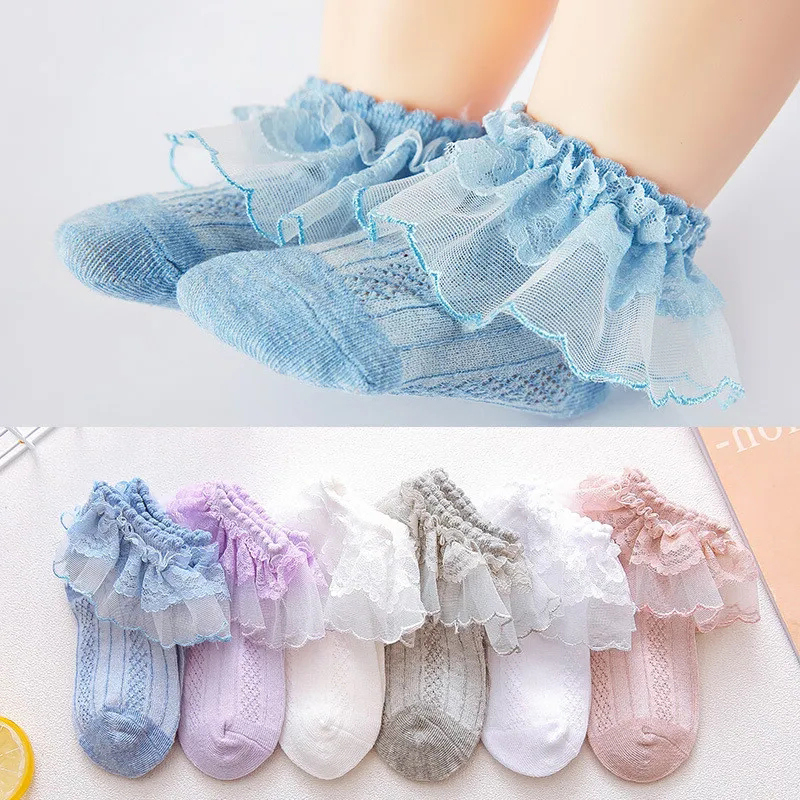 Wholesale Decorative Socks Manufacturers, FactoryAs China Decorative Socks Manufacturers and Decorative Socks Factory, Zhuji Lilong Import and Export Co., Ltd. supply Wholesale Decorativ...View Product →
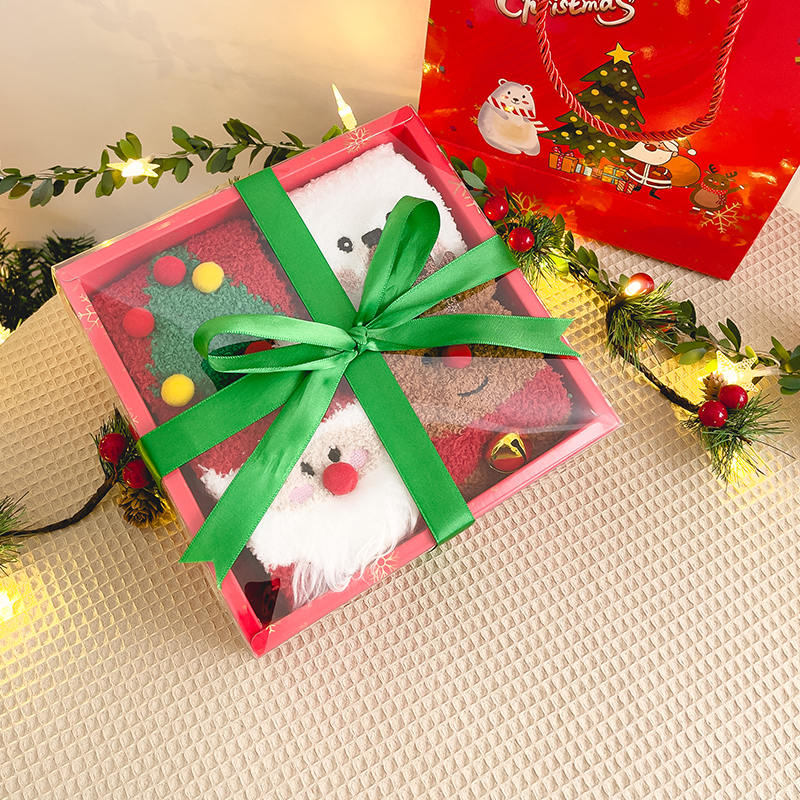 Wholesale Christmas Socks Manufacturers, FactoryAs China Christmas Socks Manufacturers and Christmas Socks Factory, Zhuji Lilong Import and Export Co., Ltd. supply Wholesale Christmas S...View Product →
Choosing the Perfect Christmas Stocking — What to Look For
Whether you are buying one stocking for your own mantel or sourcing thousands for a retail season, the same fundamentals apply:
- Define the purpose. A stocking meant to hold gifts needs generous size, a sturdy hanging loop, and reinforced seams. A purely decorative stocking can prioritize visual impact over capacity.
- Read the material label. Cotton-rich blends feel softer and hold their shape better; high-polyester stockings are often brighter but less breathable. Match the material to the person who will use it.
- Inspect the knit. Hold the stocking up to the light. A dense, even knit with clear jacquard details indicates solid manufacturing. Loose threads, uneven tension, and misaligned patterns are warning signs.
- Match size to fill. A small stocking looks charming but holds little more than a chocolate orange. Oversized stockings suit families who pack gifts generously. Measure before you buy.
- Consider customization. For brands, retailers, and event planners, OEM/ODM production allows custom colors, personalized names, tailored patterns, and bulk orders prepared for the seasonal calendar.
If you are exploring bulk or custom production, it helps to see the broader technical picture. Learn more about our special craft sock manufacturing capabilities to understand the full range of processes behind festive and decorative socks.
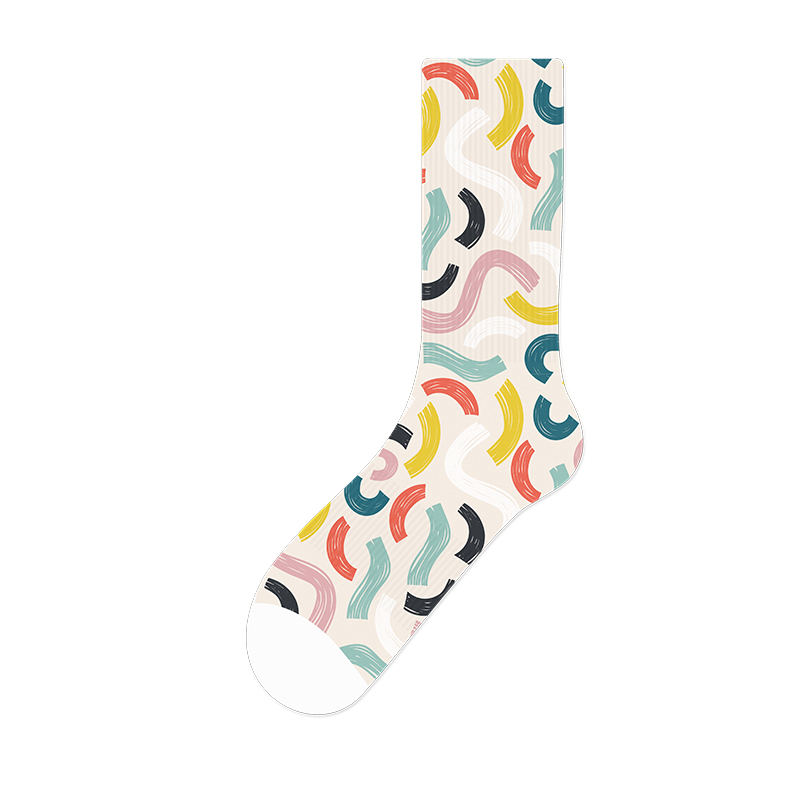 Custom Special Craft Socks Suppliers, ManufacturersZhuji Lilong Import and Export Co., Ltd. is China Special Craft Socks Manufacturers and Special Craft Socks Suppliers, supply Custom Spec...View Product →
Conclusion — A Tradition Worth Keeping Alive
The story behind Christmas socks begins with a saint who gave in secret, deepens with a Norse legend about an eight-legged horse, gains its familiar chimney-side shape from a nineteenth-century poem, and arrives today in factories that knit, decorate, and ship millions of festive stockings every December.
But the object has never been the point. A Christmas stocking is a promise in fabric: someone is thinking of you, a small surprise waits for the morning, and generosity does not need to be seen to be transformative. That is the true story behind Christmas socks. The next time you hang one by the chimney — for a child, a partner, or even yourself — you will know exactly where that small piece of cloth came from, and why it still means so much.

 English
 Español