It is 2 a.m. on a cold night. A 74-year-old woman has been asleep for three hours when a blanket slips and cold air reaches her feet. The chill wakes her fully. She tucks the duvet back around her ankles, but her toes stay cold, her mind starts running, and the rest of the night breaks into fragments. Scenes like this repeat in millions of homes every winter, and they explain why the question "should seniors wear socks to bed?" comes up so often in family and caregiver conversations.
The short answer is yes, for most healthy older adults. Wearing a clean, loose-fitting, breathable pair of socks to bed is one of the simplest and least expensive ways to fall asleep faster, wake up less often, protect thinning skin on the heels, and make the night walk to the bathroom safer. But the details decide whether socks help or harm. A cuff that is too tight can restrict circulation in legs that already circulate poorly. A pair worn several nights in a row can invite fungal infections. A thick, sweaty sock can overheat feet that can no longer feel heat well.
This guide walks through what actually changes in aging feet, the science that links warm feet to sleep onset, the specific benefits and risks for older wearers, how to choose the right pair, and what to do when socks alone are not enough. A practical routine and a caregiver FAQ close the article.
Why Senior Feet Get Cold at Night in the First Place
Conclusion first: cold feet in later life are rarely about thin blankets alone. They are the combined result of physical changes that arrive together with age, which is why a senior can feel comfortably warm under the covers while the toes stay icy.
Three changes matter most. The natural fat pad under the heel and the ball of the foot, which works as built-in insulation, gradually compresses and thins over the decades, so more body heat escapes straight into the mattress and the floor. Peripheral circulation slows, because arteries lose elasticity and push less warm blood out to the extremities; blood carries heat, so wherever the flow weakens, the skin cools. And the body's internal thermostat becomes less precise, with the skin's blood vessels reacting more slowly to temperature changes, so feet that get cold stay cold instead of warming back up quickly.
Less natural insulation
The heel fat pad thins with age, so feet lose warmth to the sheets and the floor much faster than younger feet do.
Slower blood flow
Elasticity in the arteries declines, and less warm blood reaches the toes, especially when diabetes or artery disease is present.
A weaker internal thermostat
Skin vessels respond more slowly to cold, so feet chill quickly and rewarm slowly through the night.
Some medical factors stack on top of normal aging. Diabetes and peripheral artery disease narrow the vessels that feed the feet. Hypothyroidism and anemia reduce overall heat production. Raynaud's phenomenon causes the small vessels in the toes to overreact to cold and shut down flow. Some common blood-pressure medications, and simply spending more of the day seated, make the problem worse as well. None of these conditions make bedtime socks a medical treatment, but all of them explain why many seniors cannot fix cold feet by pulling up a blanket. The warmth has to be delivered directly to the feet.
The Science: How Warm Feet Trigger Sleep
Warming the feet before sleep is not just about comfort; it works with the body's own sleep machinery. To initiate sleep, the human core needs to lose heat, roughly half a degree Celsius, or about one degree Fahrenheit. The body manages this by opening the blood vessels of the hands and feet, sending warm blood to the skin surface so heat can radiate away. Sleep researchers call this process distal vasodilation, and the speed at which it happens tracks closely with how quickly a person falls asleep.
A widely cited study published in the journal Nature in 1999 measured this relationship directly: participants whose foot vessels dilated fastest, whose feet warmed fastest, fell asleep fastest. The warm feet did not cause sleepiness on their own. They opened the escape route that let core heat leave the body, and the drop in core temperature that followed was the true sleep signal.
For a 25-year-old, that mechanism runs on autopilot. For a 75-year-old with stiffer vessels and slower circulation, it can stall: the core stays warm, the feet stay cold, and the brain stays alert. A pair of socks does part of the work from the outside. By holding a layer of warm air against the skin, socks keep the surface vessels open, so heat keeps flowing outward and the core keeps cooling.
- Socks trap a layer of warm air around the feet, stopping heat loss to cold bedroom air.
- Surface blood vessels in the feet stay open instead of constricting.
- Warm blood continues flowing to the skin of the feet and releases heat outward.
- Core body temperature begins its natural downward slide toward sleep range.
- The brain reads that slide as the signal to start sleep.
One detail matters more than most people expect: the sock must be warm but breathable. If a sock seals heat in completely, the core cannot shed warmth through the feet either, and the result is sweaty, overheated skin rather than easier sleep. The best bedtime socks behave like a valve. They hold enough warmth to keep the vessels open while letting excess heat pass through.
Without that help, cold feet work against sleep twice over: first by delaying the core-temperature drop that starts the night, and again by producing a localized chill strong enough to rouse a light sleeper whenever a blanket shifts. Older adults also spend a larger share of the night in lighter sleep stages than younger people do, which makes small discomforts at the feet matter more at 70 than they did at 30.
Evening core body temperature, illustrative index (higher means a warmer core)
969 pm
8810 pm
7911 pm
7012 am
621 am
553 am
535 am
Illustrative pattern, not measured data. Core temperature naturally slides downward through the evening; warm feet help the body reach and hold that lower, sleep-ready level instead of fighting cold-toe wake-ups.
Seven Benefits of Sleeping in Socks for Older Adults
Here is the direct answer before the details: for a healthy senior, the right pair of bedtime socks delivers seven concrete benefits, and none of them requires medication, equipment, or ongoing cost. Each one maps to a change described earlier, from slower circulation and thinner skin to weaker temperature control and unsteady night walking.
Faster sleep onset
Warm feet support the core-temperature drop that switches sleep on, which can shorten the tossing-and-turning period at the start of the night.
Fewer wake-ups from cold
Steady foot temperature means a slipped blanket is less likely to jolt the body awake in the early hours.
Fewer Raynaud's triggers at night
Cold is the main trigger for the vessel spasms of Raynaud's, so keeping toes warm through the night removes the most common trigger.
Softer, uncracked heels
A sock worn over a plain moisturizing cream holds the treatment against the skin all night, a standard home measure for cracked heels in older adults.
Calmer stiff joints
Gentle, even warmth eases the early-morning stiffness many seniors feel in the toe and ankle joints.
A buffer against hot flashes
By letting the body shed heat steadily through the extremities, socks may soften the sudden heat surges that trigger night-time hot flashes in older women.
Safer walks to the bathroom
Non-slip socks turn the coldest, slipperiest trip of the day into a protected one.
The last benefit deserves its own numbers. The U.S. Centers for Disease Control and Prevention reports that about one in four adults aged 65 and older falls every year, and a large share of those falls happen at home, at night, on the short walk between the bed and the bathroom. Bare feet or ordinary smooth socks on tile or wood flooring are a poor match for a sleepy, unsteady walker. A pair of grip-sole socks kept within arm's reach of the bed costs little, needs no installation, and removes the most dangerous few meters of the night.
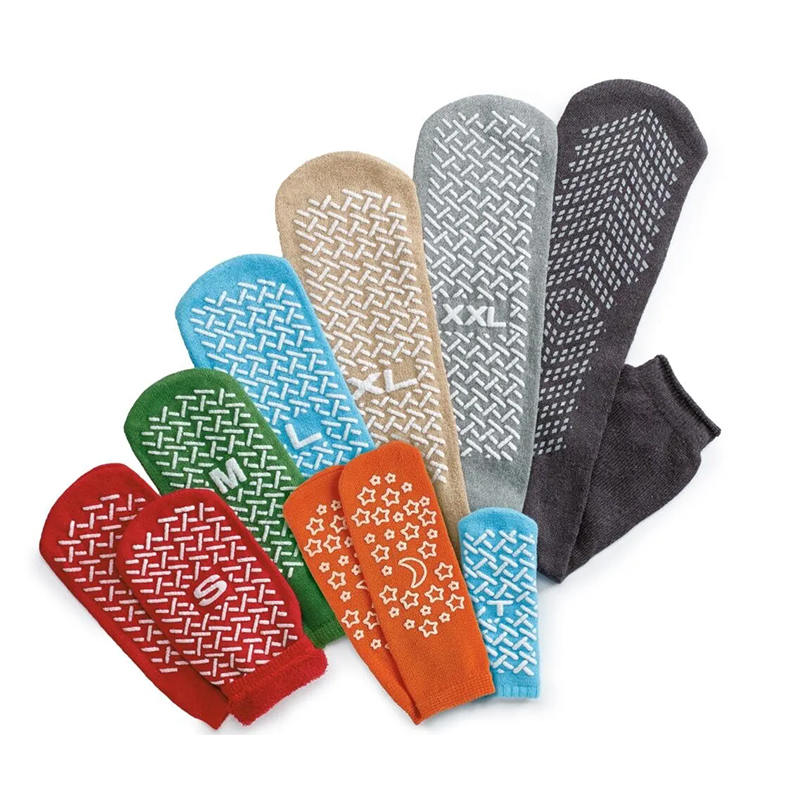 Disposable Anti-Slip Floor SocksGrip-sole socks reduce nighttime slip risk on tile or wood between bed and bathroom, a leading cause of falls for seniors; kept within reach, they add traction without any installation.View Product →
When Bedtime Socks Become a Problem for Seniors
The same pair that helps one senior can harm another. Four situations turn bedtime socks from useful into risky, and every one of them is avoidable with the right sock and the right routine.
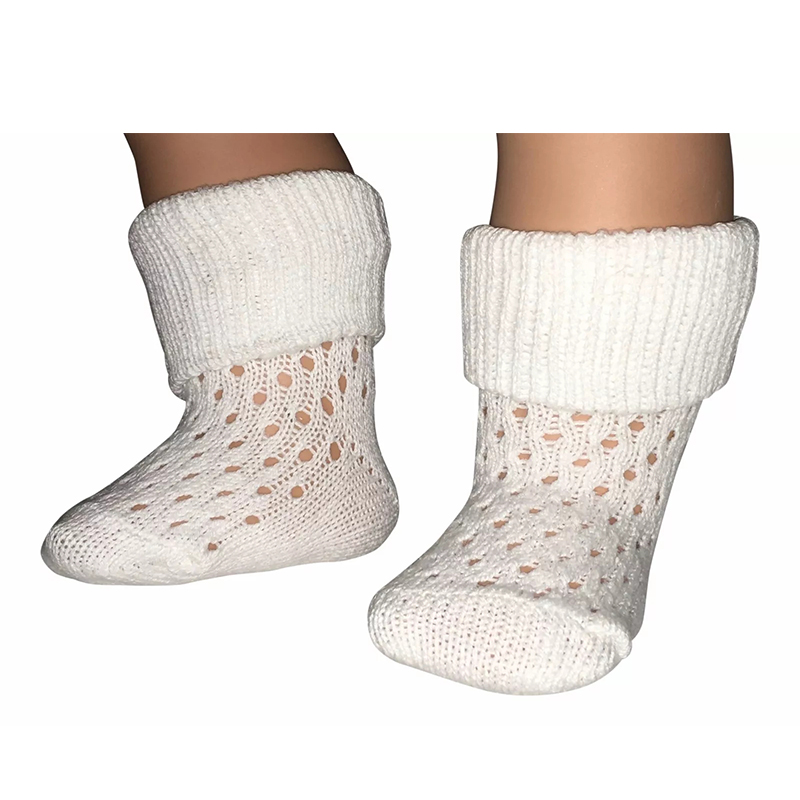
Tight cuffs come first. An elastic opening that leaves a deep ring on the ankle or calf presses on veins and slows the very circulation warm feet depend on. By morning the sock has left a groove, and the toes below it are colder, not warmer. Seniors with swollen ankles are the most exposed. A proper bed sock stays up with loose ribbing and light elasticity, not with a squeeze. If the cuff leaves a visible mark that lasts more than a few minutes after removal, the sock is too tight.
Overheating is the second risk. A heavy sock in a warm room drives foot skin temperature too high, producing sweat, itching, and fragmented sleep. For seniors with diabetic neuropathy the stakes are higher, because damaged nerves may fail to report the heat, or the blister it creates, until the damage is done. This is one more reason breathability outranks raw thickness when choosing materials.
Dampness and hygiene come third. Feet sweat measurably even in a cool bedroom. A sock worn two or three nights running becomes a warm, moist, enclosed space, which is exactly the environment athlete's foot and other fungal infections need, and older skin clears such infections more slowly. Bedtime socks should be washed after every wear and fully dry before they go back on, and socks should never be pulled onto damp feet.
The wrong sock for the situation is the fourth problem. Compression stockings are daytime medical devices, fitted for upright legs. Sleeping in them is normally done only on a doctor's instructions; lying flat, the legs no longer need gradient compression, and leftover tightness simply presses on skin that has thinned with age. Ordinary loose socks are the correct default for sleep unless a physician has prescribed otherwise.
Take the socks off and arrange a medical review if you notice:
- Redness, blisters, or broken skin that was not there at bedtime
- A cuff line that stays grooved for more than an hour after removal
- Toes that stay pale, blue, or numb while the rest of the body is warm
- A sudden increase in ankle or foot swelling
- Itching, scaling, or odor between the toes that suggests a fungal infection
How to Choose Bed Socks for Seniors: Materials and Features
Conclusion first: the best senior bed sock is warm, breathable, seamless, and loose at the cuff, in roughly that order of priority. Material decides how the sock handles warmth and moisture; construction decides whether it is safe for fragile skin. Get both right and the sock becomes a piece of nightly care equipment rather than a fashion leftover.
Comparison of common bed-sock materials for older wearers
| Material |
Warmth |
Moisture handling |
Skin feel |
Best suited for |
| Merino wool |
High |
Absorbs about a third of its weight in moisture vapor while still feeling dry |
Fine, soft fibers that normally do not itch |
Cold bedrooms, Raynaud's, all-night wear |
| Wool-blend terry |
Very high |
Good; blends dry faster than pure wool |
Cushioned loop interior over the sole |
Seniors with persistently cold feet |
| Combed cotton |
Moderate |
Absorbs readily but stays damp once wet |
Familiar, soft, easy to launder |
Warmer seasons and easy-care households |
| Bamboo viscose |
Moderate |
Wicks moisture efficiently and breathes well |
Silky and smooth against thin skin |
Night sweats and hot-flash-prone wearers |
| Brushed acrylic blends |
Moderate to high |
Poor; traps sweat against the skin |
Plush and lightweight |
Occasional use only; not ideal for diabetic feet |
Wool earns its classic reputation for a mechanical reason: the fiber holds a large amount of moisture vapor inside its structure while the surface still feels dry, and it keeps insulating even as it takes that moisture on. Modern merino wool adds fineness. Its fibers are thin enough to bend softly against the skin, which is why quality merino does not itch the way the coarse wool socks of past decades did. The design details that let wool thermal socks hold warmth without bulk are covered separately in our guide to woollen thermal sock design.
For seniors whose feet sweat at night and then chill, two-layer construction is worth a serious look: double-layer thermal socks separate a moisture-moving inner layer from an insulating outer layer, so perspiration travels away from the skin instead of cooling on it. In our own knitting plant, the two bed-sock categories that move fastest every winter are terry wool blends and loose-cuff medical socks, which matches what foot-care nurses ask about most often.
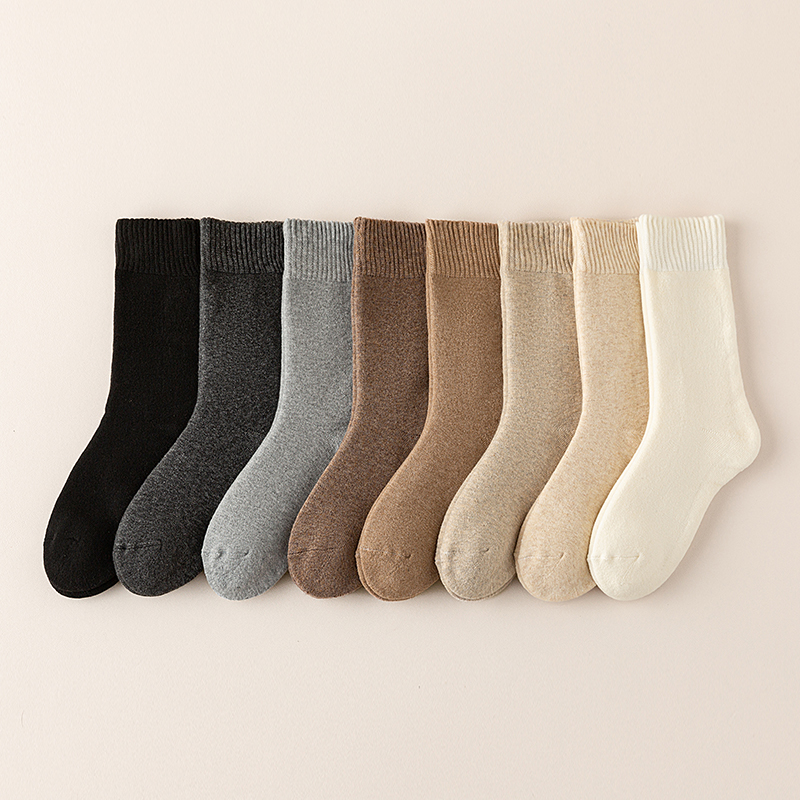 Wool Thermal Socks for Warm, Dry Feet at NightWool's natural moisture-wicking and insulating properties suit seniors whose feet sweat and then chill; warm dry socks support comfort during the bedtime routine without overheating thin skin.View Product →
Relative dry warmth of common bed-sock materials, illustrative index
Wool-blend terry100
Merino wool92
Brushed acrylic blend76
Combed cotton64
Bamboo viscose57
Illustrative comparison of insulation feel in a cool bedroom, not laboratory data. Breathability and moisture handling can matter more than peak warmth for all-night wear.
Construction features are just as decisive as material, because they determine how the sock behaves against skin that has thinned and lost padding. The checklist below reflects the questions podiatrists and foot-care nurses raise most often about night-time socks.
Construction features worth checking before buying bed socks for seniors
| Feature |
Why it matters for older feet |
What to look for |
| Non-binding cuff |
Prevents circulation restriction and morning cuff grooves |
Loose ribbing or a fold-over top; no deep elastic impression on the skin |
| Seamless or hand-linked toe |
A protruding seam rubs the same spot for hours on thin skin |
A smooth, flat toe closure with no ridge on the inside |
| Terry loop lining |
Traps warm air and cushions bony soles |
Medium loop density rather than maximum thickness |
| Grip sole |
Protects the night walk across hard floors |
A grip pattern or dots covering heel and forefoot |
| Breathable knit |
Lets excess heat escape so the core can keep cooling |
Natural fibers or moisture-managing blends |
| Easy laundering |
Socks must be washed after every single wear |
Machine washable, holds shape, dries quickly |
Two practical notes close the buying decision. First, sizing: a bed sock should never fit snugly. A slightly loose sock insulates better, presses less, and for seniors with arthritis should be easy to pull on without a struggle. Second, length: a mid-calf cut stays on through restless nights far better than a low ankle cut, and it stops the blanket from sliding down inside the cuff during the night.
A Safe Five-Step Bedtime Sock Routine
Even the best sock underperforms without a routine. Five steps, about three minutes in total, cover both warmth and foot health at the same time.
- Wash and dry the feet, including between the toes. Leftover moisture between the toes is where fungal infections start, so drying matters as much as washing.
- Apply moisturizer to the heels and soles, but not between the toes. Cream between the toes traps dampness. The sock then does its second job: holding the cream against the skin overnight, so cracked heels get roughly eight hours of treatment.
- Put on a clean, dry pair with a loose cuff. Run a finger under the cuff to confirm it is not tight, and check that no seam presses on a toe.
- Do a twenty-second skin check. Look for red spots, blisters, color changes, or cuts. This step is essential for anyone with diabetes or reduced foot sensation, because a problem that cannot be felt tonight becomes a wound by the weekend.
- Keep a spare pair and a grip pair within arm's reach of the bed. The spare covers a mid-night change after a hot flash or a sweaty spell; the grip pair covers every trip to the bathroom.
Washing closes the loop. Bedtime socks go through the laundry after every wear, at the temperature on the label, and dry completely before their next use. Two or three rotating pairs per person are enough. A worn-out pair with flattened terry loops, relaxed ribbing, or a pilling inner surface should be retired, because each of those faults quietly cancels the feature it was bought for.
Special Situations That Change the Advice
Diabetes and reduced foot sensation
Diabetes changes the calculation. Reduced sensation means overheating, seams, and tight cuffs can all cause damage before any pain is reported, and slower circulation means small wounds heal poorly. Socks for diabetic feet should be seamless, non-binding, light in color so blood or discharge shows up early, and smooth inside. The nightly skin check in the routine above becomes non-negotiable, and foot baths need a thermometer, or an elbow test, rather than trusting the feet themselves to judge water temperature.
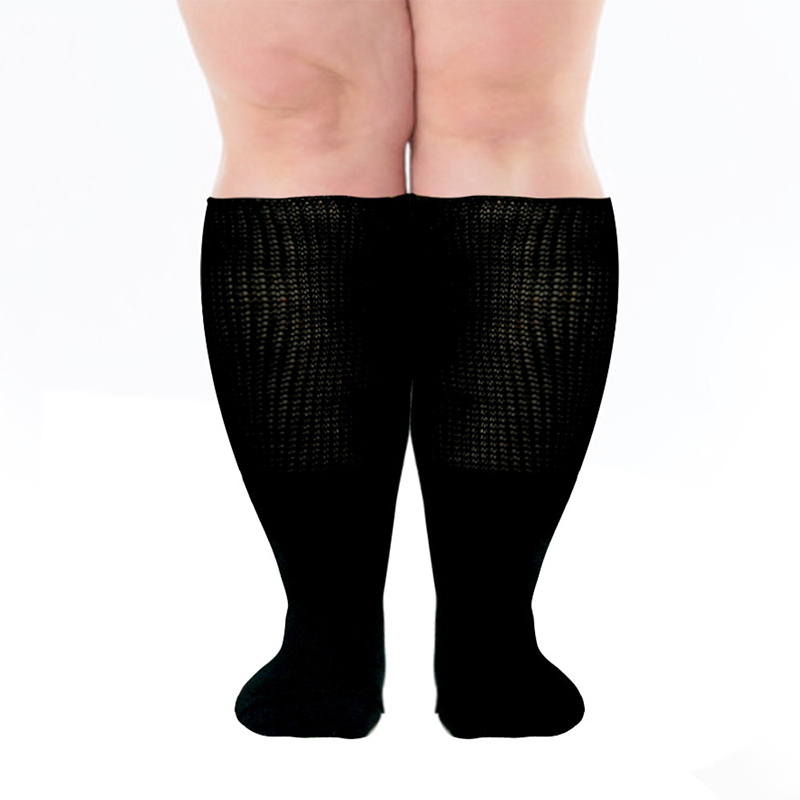 Pressure-Free Diabetic SocksFor diabetic feet, seamless, non-binding, zero-pressure socks protect skin with reduced sensation, while loose wide cuffs and smooth interiors help avoid damage that heals poorly.View Product →
Swollen ankles and edema
Fluid retention in the lower legs is common in later life, and it turns every tight cuff into a problem. Choose generous sizing, wide soft ribbing, and flat knits. If any sock leaves a visible groove that lasts more than an hour, retire it from bedtime use regardless of how warm it is.
Memory care and dementia
A person living with dementia may pull socks off at night or forget why they are on. Socks that resemble slippers, with visible grips and a soft upper, are easier to keep on and safer if the wearer gets up to wander. Consistent bedtime routines, familiar pairs, and daily foot checks by the caregiver cover the rest.
Hospital and long-term care stays
Cold wards, smooth floors, and shared laundry make sleep socks a practical item to pack for any hospital stay. Non-slip soles matter most on polished ward floors, and familiar, well-fitting pairs are usually more comfortable than standard issue. Label each pair with a name, and remind staff about loose cuffs if swelling is present.
If Socks Are Not Enough: Other Ways to Warm Senior Feet at Bedtime
When cold feet persist even with the right socks, add these measures before reaching for stronger heating. They layer well with socks rather than replacing them.
A rice sock, made in two minutes
A homemade heat pack warms the foot of the bed safely and cheaply, and it costs almost nothing to make.
- Fill a clean cotton sock about two-thirds full with dry, uncooked rice and knot the open end closed.
- Microwave it for 60 to 90 seconds, shake it to spread the heat, and test it against your own inner wrist first.
- Slide it under the blanket near the feet, close but not pressed tight against the skin.
- Never heat it longer than that, and never reuse a pack that has scorched or smells odd.
- Never place a heated pack against feet with reduced sensation unless a caregiver has tested the temperature first.
- Let it cool fully between uses, and replace it once the rice ages or the sock wears thin.
A warm foot bath before bed
Fifteen to twenty minutes in lukewarm water, roughly an hour before bed, opens the foot vessels and starts the core-cooling process early. Keep the water lukewarm rather than hot, test it with a thermometer or an elbow, and dry the feet completely, including between the toes, before the socks go on. For anyone with diabetes, that temperature test is not optional.
The bedroom sweet spot
Most sleep guidance puts the ideal bedroom at roughly 60 to 67 degrees Fahrenheit, or 15.5 to 19.5 degrees Celsius. A senior who runs cold should aim for the upper end of that range rather than overheating the whole room. Cool air plus warm feet supports the core-temperature drop that sleep needs; a hot room works against it and dries out thin skin.
Small additions that help
- A hot water bottle wrapped in a towel at the foot of the bed, refilled as part of the bedtime routine
- A loose extra blanket folded over the foot of the bed, so the feet get double layers without weighting the whole body
- A bed cradle, which holds blankets off the toes for seniors whose feet hurt under any weight at all
- A short walk around the house before getting into bed, which lifts circulation for the next hour or two
When cold feet need a doctor
Persistent cold feet that no sock seems to fix deserve a medical opinion, especially when they come with color changes in the toes, pain when walking that eases with rest, or one foot noticeably colder than the other. Those patterns can signal a circulation problem that is far easier to manage when caught early. Bedtime socks are comfort care, not a substitute for a vascular check.
Frequently Asked Questions About Seniors Wearing Socks to Bed
Is it safe for a senior to sleep with socks on every night?
For most healthy older adults, yes, as long as the pair is clean, loose, breathable, and goes onto dry feet. The exceptions are active foot infections, open wounds, a doctor-directed compression schedule, and situations where overheating is a risk, such as a fever. When those apply, socks come off until the situation changes.
Should seniors wear compression socks to bed?
Generally no, unless a physician has prescribed them for night use. Compression stockings are fitted for upright daytime legs; lying flat, the legs no longer need that gradient, and the leftover tightness only presses on thinner skin. Daytime medical compression should follow the prescriber's schedule exactly.
Which material is best for bedtime socks?
Merino wool and wool blends for cold bedrooms, because they insulate while breathing and keep feeling dry. Bamboo viscose for feet that sweat or for hot-flash-prone sleepers. Combed cotton for warm rooms and easy laundering. Avoid all-acrylic pairs for all-night wear on fragile skin, because they trap sweat against it.
How often should bedtime socks be washed and replaced?
Washed after every wear, and replaced when the cuffs stop rebounding, the terry loops flatten, or the inner surface pills. Most households find that two or three rotating pairs per person cover an entire season comfortably.
Can socks really help Raynaud's symptoms at night?
They help by removing the trigger, not by treating the condition. Cold sets off the vessel spasms in Raynaud's, so warm feet through the night mean fewer opportunities for an attack. Frequent or severe attacks still belong in a doctor's hands, and the hands and fingers need the same protection from cold.
What if a senior's feet sweat in socks at night?
Switch to a moisture-wicking material such as merino or bamboo, drop to a thinner pair, and check the room temperature, which is often the real culprit. Wash the feet and the socks diligently, rotate pairs so everything dries fully, and mention persistent night sweats to a doctor, since they can have causes beyond the bedroom.
Are grip socks worth using just for night walks?
Yes. Grip soles earn their place the moment bare or smooth-socked feet touch tile or hardwood in the dark. Keep a grip pair beside the bed, check occasionally that the grip dots have not worn smooth, and wash them under the same after-every-wear rule.
What makes socks different for seniors with diabetes?
Three features: a genuinely non-binding cuff, a seamless or hand-linked toe, and a light color that shows blood or discharge early. Combine those with the nightly skin check, never judge bath-water temperature with diabetic feet, and where swelling is present, choose extra-wide, extra-soft constructions.

 English
 Español