Home / Blog / Industry News / Are Compression Socks Safe to Wear All Day or Overnight? A Manufacturer's Guide
Are Compression Socks Safe to Wear All Day or Overnight? A Manufacturer's Guide
Are Compression Socks Safe to Wear All Day or Overnight?
Yes, compression socks are safe to wear all day for most people, and they can also be worn overnight when there is a clear reason to do so and the fit is correct. This answer depends on three things: the compression level measured in mmHg, the quality of the fit around the ankle and calf, and the reason you are wearing them. Each of these factors works with the others, so it is worth understanding the basics before you decide on an all-day or overnight schedule.
If you are healthy, have no diagnosed circulation problems, and choose a sock that matches your leg measurements, wearing compression socks for a full work day is generally well tolerated. Overnight use is more specific. It is recommended for situations such as post-venous-procedure recovery, pregnancy-related swelling, night cramps linked to varicose veins, and long flights where you sleep in a seated position. For anyone experiencing numbness, sharp pain, or changes in toe color, the socks should come off immediately.
All daySafe for most people in an 8-16 hour wearing window when the size and mmHg level are correct.
OvernightSafe when there is a medical or travel reason, and when the compression level is not excessive.
Main risksWrong sizing, excessive pressure, and undiagnosed arterial or nerve conditions.
How Compression Socks Work: Graduated Pressure and mmHg Levels
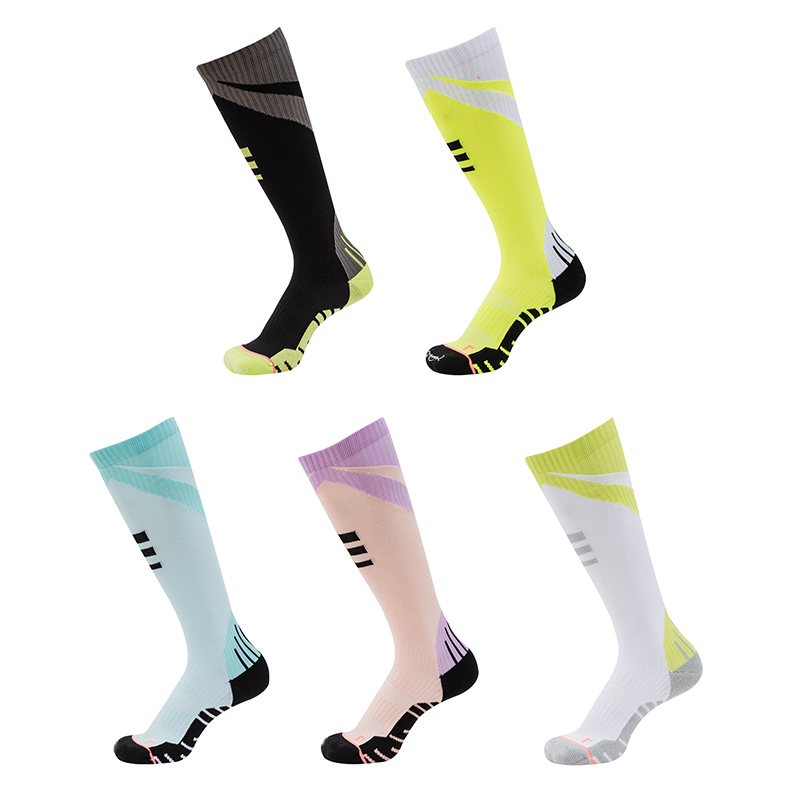
Compression socks support blood flow by applying the highest pressure at the ankle and a gradually lower pressure toward the knee or thigh. This pattern is called graduated compression. It helps the veins in the lower leg push blood back to the heart against gravity, reducing blood pooling, swelling, and the heavy sensation that appears after long hours of sitting or standing. The calf muscles, which act as a pump during walking, work more efficiently when surrounded by a sock that gives gentle external support.
The strength of the sock is expressed in millimeters of mercury (mmHg). The number describes how much pressure the fabric exerts on the leg. There is no single "best" level. The right range depends on whether the goal is general comfort, athletic recovery, or management of a diagnosed vein condition.
Compression levels are matched to the condition and the wearing situation. A higher mmHg number is not automatically better for daily wear.
Compression level
mmHg range
Typical use
Light support
8-15
Long flights, long drives, mild leg fatigue, standing work
Prescribed for chronic venous conditions, lymphedema, severe varicosity
Extra firm
40+
Prescription only, managed by a vascular specialist
The pressure pattern across the leg matters as much as the number printed on the package. In a well-made compression sock, the pressure should drop smoothly from ankle to calf. An inconsistent stitch structure or uneven yarn tension can create bands of higher pressure that feel like tight rings around the leg. This is one reason manufacturing quality directly affects comfort and safety. Our production team checks pressure consistency during the knitting process rather than only checking the finished size, because small variations in tension change the gradient.
Graduated pressure profile along the leg
A 20-30 mmHg sock typically applies close to 24 mmHg at the ankle, about 18 mmHg at the calf, and roughly 14 mmHg near the knee. The exact values vary by brand and model.
It is also important to understand that compression socks do not work like a tourniquet. The fabric is elastic and the pressure is distributed across the entire surface of the leg. When the sock fits correctly, you should feel firm support but not a pinching sensation anywhere.
Wearing Compression Socks All Day: What a Normal Schedule Looks Like
For most people, "all day" means 8 to 16 hours. A typical routine is to pull the socks on in the morning, before the legs have had a chance to swell, and take them off in the evening before bed. Nurses, factory workers, restaurant staff, teachers, and travelers use this pattern every day without problems. The compression supports the vein walls while the leg muscles are active, which is when venous return works best.
Athletes also fall into the all-day category. Runners often wear compression for training sessions and keep the socks on for several hours afterward to speed up recovery. The same graduated pressure that reduces blood pooling during sport also helps clear metabolic waste products from the muscles after intense effort. This is a well-documented function of compression-designed athletic socks, and the principle is the same whether the wearer is a professional cyclist or a weekend hiker. We cover the circulation effects of this category separately in our analysis of compression-designed athletic socks and lower-limb blood flow.
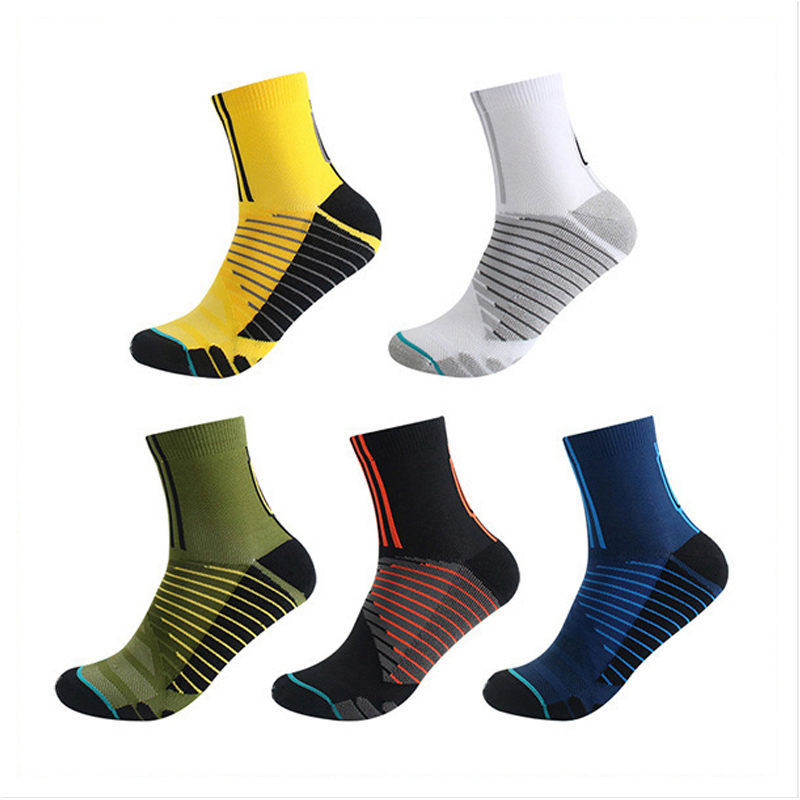
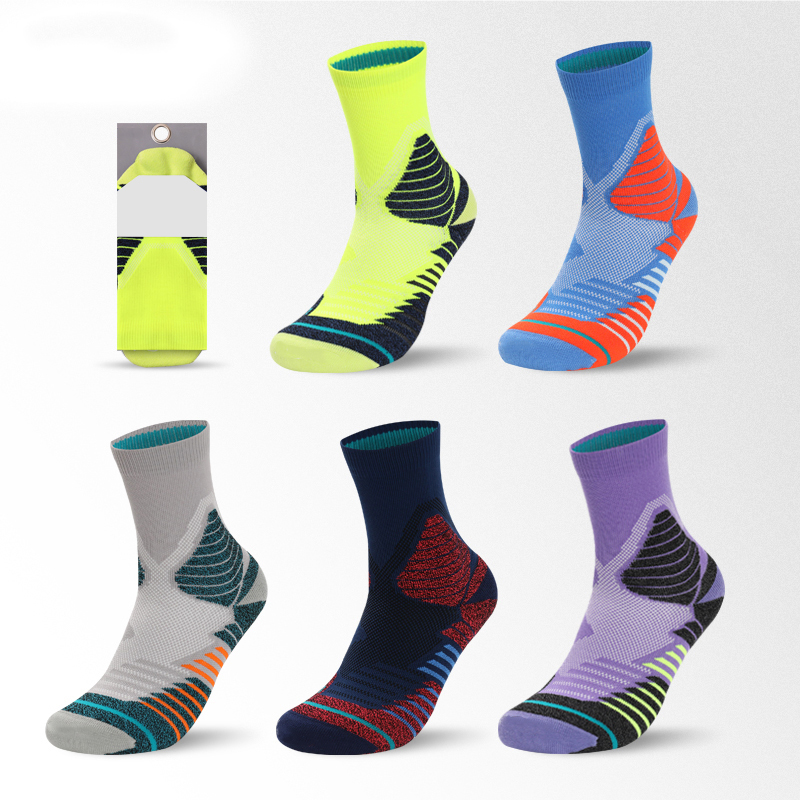
If you are considering all-day wear, look for a sock that pairs compression with comfort features. For example, an outdoor running compression sock with terry cushioning in the heel and forefoot absorbs impact during movement while still delivering the pressure profile the leg needs. A soft, non-elastic band at the top prevents the sock from sliding down and forming a tight roll.
Recommended daily wear time by compression level
8-15 mmHg
14-16 hrs
15-20 mmHg
12-14 hrs
20-30 mmHg
8-12 hrs
30-40 mmHg
6-10 hrs
There is also a practical reason not to treat the maximum time as a target. Compression socks feel good when they are doing useful work, and they feel restrictive when they are not. After 12 or 14 hours, most legs have reached a stable state and the added value of wearing the sock drops. If the socks start to feel tight or itchy in the evening, removing them for the night is completely reasonable.
Is It Safe to Wear Compression Socks Overnight?
Overnight wear is safe and useful in specific situations, but it is not recommended for everyone. The main difference from daytime wear is the position of the body. When you lie flat, gravity is no longer pulling blood into the lower legs, so the veins receive much less help from an external sock. In most cases, overnight compression is recommended when there is a specific reason to keep the veins supported even in a horizontal position.
Situations where doctors commonly recommend overnight wear include the days after vein procedures such as sclerotherapy or endovenous laser treatment, pregnancy-related swelling in the third trimester, and recurrent leg cramps associated with varicose veins. People who work night shifts and need to sleep during the day may also choose to keep their socks on because their body clock does not align with the normal "elevate the legs at night" pattern.
For people without these indications, sleeping in compression socks is usually unnecessary. It is not dangerous in itself, but the added pressure while lying down can make the legs too warm, create skin irritation, or wake you up if the sock folds and forms a crease. If a lightweight 15-20 mmHg sock feels comfortable, some people wear it through the night without issues. Higher levels, such as 30-40 mmHg, should only be kept on overnight when a doctor has confirmed that the circulation can handle it.
A good overnight compression sock should feel smooth on the skin, have a flat toe seam, and use a breathable knit so moisture does not build up over several hours. In our range, medical insurance socks are produced with a stable pressure profile and a gentle top band, which makes them suitable for extended wear when the user needs a light-to-moderate level of support.
Sleeping while wearing socks that are too tight is the scenario that causes problems. During sleep, movement is limited, skin temperature rises, and the foot may swell slightly from the warmth. If the sock fits too snugly around the toe bed or the top band, the pressure can leave deep marks or cause tingling. If you wake up with numbness or white areas on the toes, those socks should not be worn overnight again until the fit has been corrected.
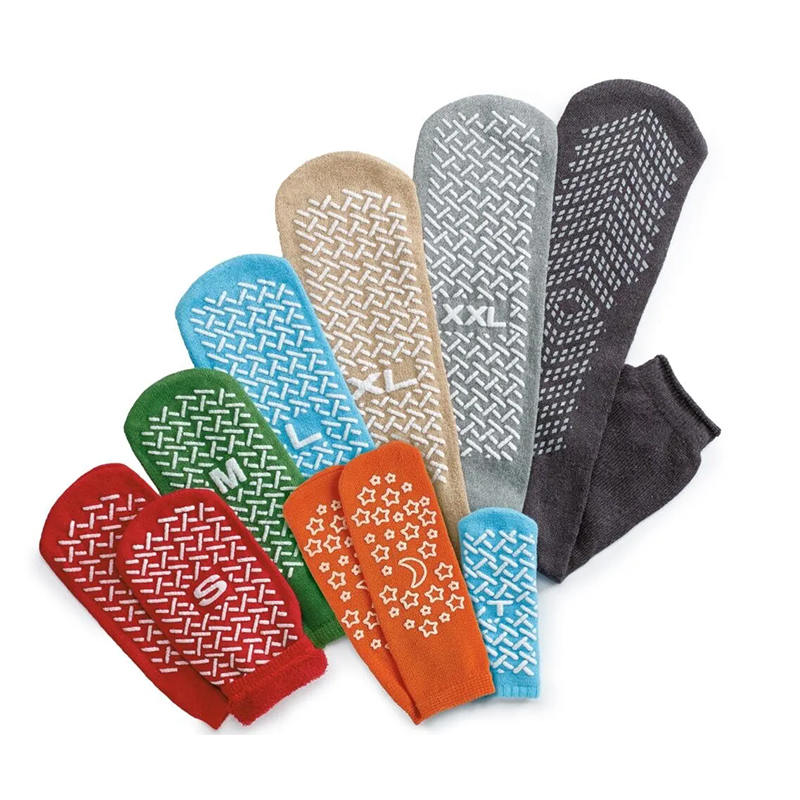
A closely related product type is the flight sock, commonly worn on long-haul flights. Flight socks usually provide a milder 10-15 mmHg compression and are intended to reduce the risk of deep vein thrombosis during long periods of immobility. Some travelers sleep in them while seated and remove them after landing. The same sock is not automatically suitable as a daily compression solution because its pressure is lower than what many medical conditions require. Our factory in Datang began as a producer of disposable flight socks in 2003 and now turns out around 80,000 pairs per day, including compression and medical-style products, so this distinction between flight support and clinical compression is part of our daily production experience.
Who Should Avoid or Limit Compression Sock Wear
Compression socks are a safe tool for the majority of users, but certain conditions require extra caution. If any of the following applies, check with a healthcare professional before wearing compression socks all day or overnight.
These guidelines are general. A compression sock should not replace a medical diagnosis.
Condition
Guidance
Peripheral arterial disease
Avoid compression until a vascular assessment confirms arterial blood flow is adequate
Diabetic neuropathy or reduced sensation
Only light compression with regular skin checks; reduced ability to feel early pressure damage
Skin infection or open wound
Treat the skin condition first; compression over broken skin can worsen infection
Severe heart failure
Medical approval required; compression changes fluid distribution in the body
Active deep vein thrombosis
Follow the treatment protocol exactly; removing or adding compression without advice can be risky
Fragile or very thin skin
Use mild levels and carefully padded edges to avoid bruising
Beyond these conditions, the main risk is choosing a sock that is too small or too strong. A common mistake is moving from 15-20 mmHg to 20-30 mmHg "to get better results." This does not work that way. Using a firmer level than the leg needs can compress the superficial veins too much, which increases the resistance to blood return at the surface and creates the opposite effect.
Warning Signs That the Sock Is Too Tight
Numbness or tingling
A pins-and-needles feeling in the toes means the sock is pressing on nerves or vessels.
Toe color changes
White, bluish, or very dark red toes suggest restricted blood flow and require immediate attention.
Deep skin marks
Grooves that stay pressed into the calf for more than a few minutes after removal indicate excessive pressure.
Increased leg pain
Compression should reduce heaviness. New or worsening pain is a sign to stop wearing the socks.
If any of these appear during the day or night, remove the socks immediately. If the feeling does not return to normal within a short period, consult a medical professional. These signs are rare with correctly fitted socks, but they are the body's way of saying the pressure balance is wrong.
Getting the Fit Right: Sizing, Measuring, and Common Mistakes
The safest compression sock is the one that fits. Sizing is based on measurements, not on shoe size. A person who wears a size 42 shoe can have an ankle small enough for a medium or large enough for an extra-large, so the same shoe size does not reliably predict which compression sock will fit.
Measure the ankle circumference at the narrowest point, just above the ankle bone.
Measure the calf circumference at the widest point.
If using thigh-length socks, measure the thigh at the widest point as well.
Take measurements in the morning, before the leg swells during the day.
Compare the measurements with the size chart on the product page, using the larger measurement if you fall between sizes.
Timing matters. Legs naturally swell as the day progresses, so a measurement taken at 6 p.m. can be 3 to 5 percent larger than one taken in the morning. Socks chosen from an evening measurement may be loose in the morning and fail to provide the intended pressure. If you already wear compression socks, re-measure every few months, because weight changes and muscle mass changes affect leg size.
Another common issue is the fabric bunching behind the knee. This happens when the sock is too long for the calf. The excess fabric folds and creates a tight ridge that restricts movement. The length of the sock should be chosen according to the calf length, not the user's height. When pulling the sock on, smooth the fabric carefully and make sure the heel pocket sits over the actual heel rather than pulling up toward the Achilles tendon.
Material and Construction Quality: What the Manufacturer Watches
From the factory side, the safety and comfort of a compression sock begin with yarn selection and machine setting. The elastic core is usually made of spandex or elastane, and it is covered with an outer fiber such as nylon, polyester, or cotton. The outer fiber determines the feel, moisture behavior, and durability, while the elastic core determines the pressure. If the elastic core is not properly covered, it can feel harsh against the skin and cause irritation during long wear.
The knitting process also determines how evenly the pressure is distributed. Socks produced on circular knitting machines with a compression function use different yarn feed rates and stitch cam settings to create the graduated profile. A machine that is not calibrated will produce pressure bands, which are areas where the compression suddenly increases because the yarn tension shifted. These bands can feel like a rubber band around the leg and are the most common cause of discomfort in cheap compression socks.
Terry loops are another element that changes the wearing experience. A terry-cushioned compression sock adds a layer of soft loops on the inside of the heel and forefoot, making the sock more comfortable during running or long walking without changing the external pressure profile. This is why athletic compression socks are often structured differently from medical ones even when the mmHg range is similar.
For cyclists, a compression sock with a thin knit and a smooth outer surface reduces friction inside the shoe while keeping the pressure gradient stable over a long ride. The same product needs to resist abrasion from the shoe collar and hold its elasticity through repeated washing, which is why the construction details matter as much as the pressure spec.
This is also where working with an experienced production partner makes a difference. Our production is supported by a sister knitting company with more than a decade of sock manufacturing experience, which gives us direct control over yarn sourcing, machine calibration, and finished pressure testing. If you are planning a private-label compression sock line, the fastest way to get the fit right is to send your size specifications and pressure requirements to our production and quality team directly and build a prototype from a sample.
How Long Compression Socks Last and How to Care for Them
Compression socks lose pressure as the elastic fibers fatigue. With daily wear and washing, most compression socks provide consistent pressure for about 3 to 6 months. After that, the fabric may still feel like a normal sock, but the mmHg reading drops and the health benefit declines. If you use them for circulation issues, replacing them on a regular schedule is more important than waiting for visible damage.
Wash in water below 30°C with a mild detergent.
Do not use fabric softener; it coats the elastic fibers and reduces pressure.
Do not twist or wring the socks aggressively.
Dry them flat away from direct sunlight and radiators.
Check the ankles for thinning fabric; these areas lose pressure first.
If you rotate two or three pairs, each pair lasts longer and keeps its pressure rating closer to the labeled level. A compression sock that has become loose around the ankle is no longer performing the job it was designed for, regardless of how it looks.
Frequently Asked Questions About Compression Sock Safety
Can I wear compression socks every day?
Yes. Daily wear is normal for people who stand, sit, or travel for long hours. Wear them in the morning and remove them in the evening. Most users can wear compression socks every day for months as long as the fit is checked regularly and the socks are replaced when they lose elasticity.
Is it bad to sleep in compression socks?
Not for everyone. It is safe when recommended by a doctor or when the compression is mild. If you wake up with numbness, toe discoloration, or deep marks, stop sleeping in them and check the fit. The overnight decision should be based on a specific reason, not just a habit.
How tight should compression socks feel?
Firm support around the ankle, gradually reducing toward the calf. There should be no sharp pain, pinching, or restriction in the toes. You should be able to slide one finger between the top band and the leg without forcing it.
Can compression socks cut off circulation?
Correctly fitted socks do not. A sock that is too small or has a very high mmHg level can compress veins too strongly and reduce venous return, which feels like a tight band. Sizing, not the sock itself, is the deciding factor.
Should I wear compression socks on a plane?
For long flights, mild compression around 15-20 mmHg can reduce leg swelling and discomfort. Move your legs regularly and stay hydrated during the flight. If you have a history of blood clots, ask your doctor before using compression on a flight.
How long do compression socks last?
About 3 to 6 months with regular use. Washing in warm water, using fabric softener, or drying in a machine shortens the lifespan of the elastic fibers. Replace them when the ankle fabric starts to feel loose.
Can I wear compression socks if I have diabetes?
Only if the skin, nerve, and circulation status is checked by a healthcare professional. Reduced sensation can hide pressure damage, so light compression and daily skin checks are essential.
Are 20-30 mmHg socks safe without a prescription?
In most markets, 20-30 mmHg socks are sold without a prescription, but they provide a firm level of support and are best used when you have a reason such as moderate swelling or venous insufficiency. If in doubt, start at a lower level and speak with a professional.

 English
 Español