By two in the afternoon, the white cotton crew socks that felt crisp at eight in the morning have soaked through — not from rain, not from a spill, but from the wearer's own feet. A pair of human feet carries roughly 250,000 sweat glands, among the densest concentrations anywhere on the body, and during a warm, active day they can release close to a cup of moisture. What happens to that moisture — whether it evaporates away or sits against your skin until the sock is wrung out at night — is decided almost entirely by what the sock is made of and how it is knitted.
So, are cotton socks good for sweaty feet? Here is the straight answer from a sock factory floor: pure cotton is usually the wrong choice for genuinely sweaty feet worn all day. Cotton absorbs sweat quickly and then holds it, which keeps skin damp, raises friction, and invites blisters and odor. That does not mean cotton is useless. Soft, breathable cotton works well for short days, light sweaters, and ventilated footwear — and cotton-rich blends with the right knit structure solve most of the problem while keeping the comfortable, natural feel people actually like about cotton. The rest of this guide explains the mechanics in plain language, with the numbers a buyer can check on any sock label.
250,000sweat glands in a pair of feet — denser than almost anywhere else on the body
8.5%standard moisture regain of cotton fiber — it takes on moisture readily and releases it slowly
80,000pairs our production lines knit per day, most designed around moisture and comfort management
What Sweat Actually Does Inside a Cotton Sock
Foot sweat is mostly water with small amounts of salt. Fresh from the gland, it is close to odorless. Problems begin when the moisture has nowhere to go. Inside a shoe, airflow is limited, and the sock becomes the only system moving sweat from skin to air. If the sock stalls that process, the microclimate between skin and fabric stays saturated for hours.
Cotton is a hydrophilic cellulose fiber. In standard textile testing conditions, cotton fiber holds about 8.5 percent of its own weight in moisture before it even feels damp — and when liquid sweat arrives, it soaks it into the fiber bundles readily. That absorbency is exactly why cotton feels pleasant at first contact. The catch is release: moisture held inside cotton fibers evaporates slowly, especially in the enclosed, low-airflow environment of a shoe. A soaked cotton sock can stay wet all afternoon, and it dries far slower than a polyester or nylon knit of the same weight.
Persistent dampness triggers a predictable chain of problems. First, the outer layer of skin softens and turns pale — a condition called maceration. Softened skin has a higher coefficient of friction, so the same walking motion that would glide across dry skin now drags, and hot spots form. Most hikers and runners know this sequence intimately: damp sock, warm shoe, and within an hour the first tender patch that becomes a blister by the end of the day.
Dampness also feeds odor and skin trouble. Skin bacteria break down components of sweat into the compounds we actually smell, and a continuously wet cotton sock gives them the warm, moist environment they need to multiply. Foot health professionals likewise warn that all-day dampness raises the risk of fungal problems such as athlete's foot. None of this is because cotton is somehow "dirty" — it is simple physics. A fiber that holds moisture against the skin for extended periods creates conditions that feet do not tolerate well.
Cotton feels comfortable at the moment you put it on precisely because it absorbs quickly. The same property is what keeps it wet later. Morning comfort is not evidence about how the sock will perform at three in the afternoon.
Cotton vs Wool, Bamboo, Nylon and Polyester: What the Numbers Say
Textile engineers compare fibers using a figure called moisture regain: the percentage of moisture a fiber absorbs from standard air (around 20°C at 65 percent relative humidity) relative to its dry weight. It is a useful first filter when you evaluate a sock label, because it tells you how much moisture the fiber wants to hold before sweat even enters the picture.
Standard moisture regain of common sock fibers and what each means for sweaty feet
| Fiber |
Standard moisture regain |
How it handles sweat |
Where it fits best |
| Combed cotton |
8.5% |
Absorbs sweat quickly into the fiber and releases it slowly; soft, natural hand feel |
Short days, light sweating, breathable shoes |
| Merino wool |
About 16% |
Takes moisture vapor into the fiber core while the surface stays drier to the touch; naturally odor-resistant |
All-day wear, hiking, travel, winter |
| Bamboo viscose |
About 13% |
Smooth and absorbent, dries somewhat faster than cotton |
Warm-weather everyday wear |
| Nylon |
About 4.5% |
Low absorption, strong and durable; helps carry sweat through the knit |
Reinforcement and blends in sport socks |
| Polyester |
About 0.4% |
Barely absorbs; moves moisture outward where it evaporates fast |
Quick-dry sport knits, hot conditions |
Notice the nuance: wool regains more moisture than cotton, yet wool is widely recommended for sweaty feet. The difference is where the moisture sits. Wool takes water vapor into the fiber interior and buffers humidity there, while the fabric surface next to your skin stays comparatively dry, and the moisture is released as air moves through the shoe. Cotton binds moisture in a way that leaves both the fiber and the skin surface wet. Polyester sits at the opposite extreme: it absorbs almost nothing, so sweat travels through the knit and evaporates from the fabric surface, which is why quick-dry sport socks are built on polyester and nylon.
Relative dry-down speed after heavy sweating (higher is faster)
Values are relative comparison indices between fibers of the same knit weight, drawn from mill wear observations, not laboratory guarantees.
For readers who want to go deeper on the fiber that performs best in everyday rotation, we explain in a separate guide why wool socks have good moisture-wicking properties and how that behavior translates into drier, less odor-prone feet over long days.
The practical takeaway: for sweaty feet, either keep cotton as a minority of the blend or accept that pure cotton socks are a short-wear tool. Fiber choice is half the equation — the knitting structure is the other half, and it is where manufacturers earn their reputation.
When Cotton Socks Work Fine — and When They Work Against You
Blanket statements like "cotton is bad" oversimplify a decision that depends on how long you wear the sock, how much you sweat, and what surrounds your foot. A useful way to decide is to separate the situations where cotton's absorbency is harmless — even pleasant — from the situations where it actively works against you.
Cotton handles these situations well
- Commutes, office days, and errands where you are on your feet for only a few hours
- Light to moderate sweating and dry climates
- Breathable footwear such as canvas, mesh, or well-ventilated leather
- Lounging, sleeping, and home wear where shoes are off and air circulates freely
- Wearers who simply prefer the soft, natural feel of cotton and change socks daily
Cotton works against you when
- Shifts stretch past eight hours or involve constant walking and standing
- Sport is involved: running, court games, hiking, long rides
- Footwear is waterproof or rubberized, so evaporation is close to zero
- Weather is hot and humid, and shoes stay damp between wears
- You already fight blisters, odor, or recurring athlete's foot
There is also a wide gray zone. A cotton sock on a cool, dry day inside a breathable shoe may never cause trouble; the same sock inside a waterproof work boot during a humid summer week becomes a wet compress by lunchtime. If your days fall into that gray zone, the most reliable upgrade is not abandoning cotton but changing what the sock is made of around the cotton — which is exactly what blend engineering is for.
Knit Structure: The Half of the Equation Most People Miss
Two socks can contain identical yarn and behave completely differently on a sweaty foot, because the geometry of the knit decides how air moves and how the fabric touches skin. Three structural features matter most, and none of them appear on the fiber label.
Terry loops under the foot
Terry construction leaves uncut loops on the fabric surface, usually across the sole. The loops add cushioning, but their more important job for sweaty feet is creating micro air channels between the skin and the denser fabric body, which spreads moisture over a larger evaporation area instead of letting it pool under the heel and forefoot. Loop density and loop height are measurable on the machine: too sparse and the cushioning collapses after a few washes; too dense and the sock turns bulky inside fitted shoes. This structure is knit on specialized terry looping machines, and the gap between a well-set terry sock and a cheap one shows up within weeks of regular washing.
Mesh ventilation panels
Openwork knit across the instep — the top of the foot where the tongue of the shoe traps the most heat — gives sweat a direct escape route. In our wear trials, instep ventilation makes a visible difference: the same fiber blend reads noticeably drier at the end of a shift when the instep is meshed. The engineering trick is balancing openness against durability, because oversized mesh holes snag on toenails and shoe linings and eventually run.
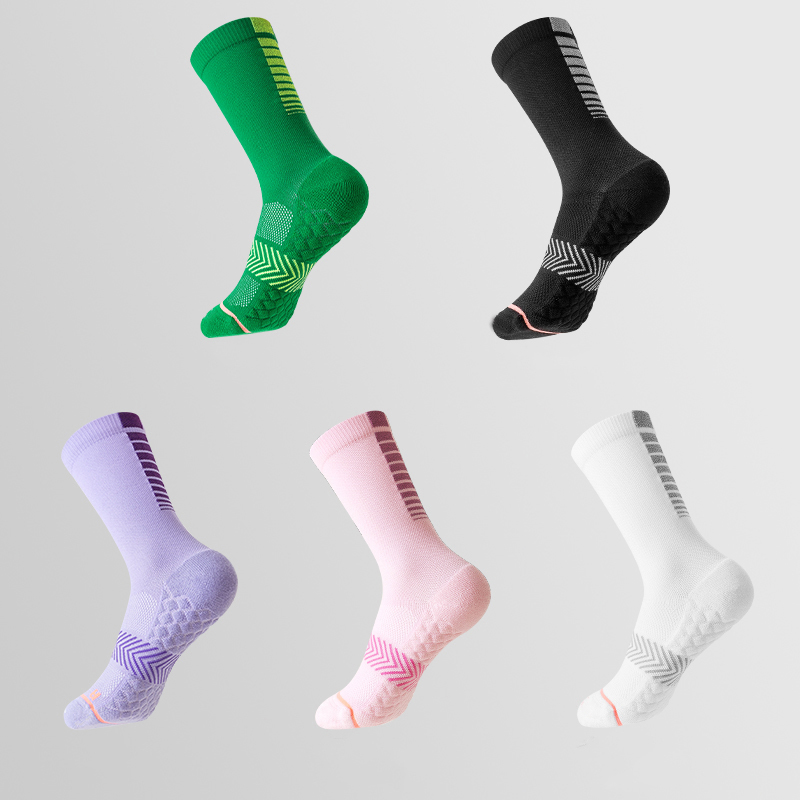 Mesh Instep Quick-Dry Compression Cycling SocksThese nylon compression socks pair a mesh instep for direct heat and sweat escape with quick-dry fibers and arch-support pressure. They illustrate the article's point that instep ventilation keeps feet measurably drier through long shifts on the bike.View Product →
Double-layer construction
A double-layer sock knits two fabric plies that slide microscopically against each other. The inner layer sits against the skin and manages moisture; the outer layer absorbs the friction from the shoe. Because shear is taken up between the layers instead of between skin and fabric, hot spots form far less readily — the same principle behind the layering systems hikers use. The structure also traps a thin layer of moving air, which keeps evaporation going even when the shoe is laced tight.
Blend Ratios Sock Manufacturers Use to Handle Sweat
When a factory designs a sock for sweaty feet, the composition line on the label is a set of deliberate trade-offs. The cotton share mostly decides feel: softness, breathability, that familiar natural touch. The wicking share — polyester and nylon — decides how fast the sock dries. Elastane, usually three to five percent, decides whether the knit stays close to the foot without binding. Move the ratios and you move the experience.
Everyday Comfort Blend
About 75% combed cotton, 20% polyester, 5% elastane. Keeps the soft cotton feel people want for daily wear, while the polyester share shortens dry-down enough for office days and commutes. A sensible default for light-to-moderate sweaters.
High-Output Sport Blend
Cotton held to roughly 40–50%, with polyester and nylon carrying the majority, plus mesh instep panels and underfoot terry. Built for training days, long shifts, and anyone who has already soaked through a pure cotton pair by midday.
Wool-Forward All-Day Blend
Roughly 50–60% wool with nylon reinforcement and a touch of elastane. Wool buffers humidity vapor and resists odor, making it the strongest choice for travel, winter wear, and multi-day use where washing is inconvenient.
Yarn quality matters as much as the ratio on the label. Combed cotton, which has short fibers removed, resists pilling and feels smoother against damp skin than carded cotton. A tighter yarn twist holds its shape through repeated wash cycles; a loose one mats down and traps moisture in flattened loops. When you evaluate samples, wash them three or four times before judging — the second and third wash are where cheap knits reveal themselves.
Our basketball line is a good reference point for how these decisions come together in a high-output design: quick-dry yarns, breathable terry under the sole, and a nonslip fit that holds through a full game.
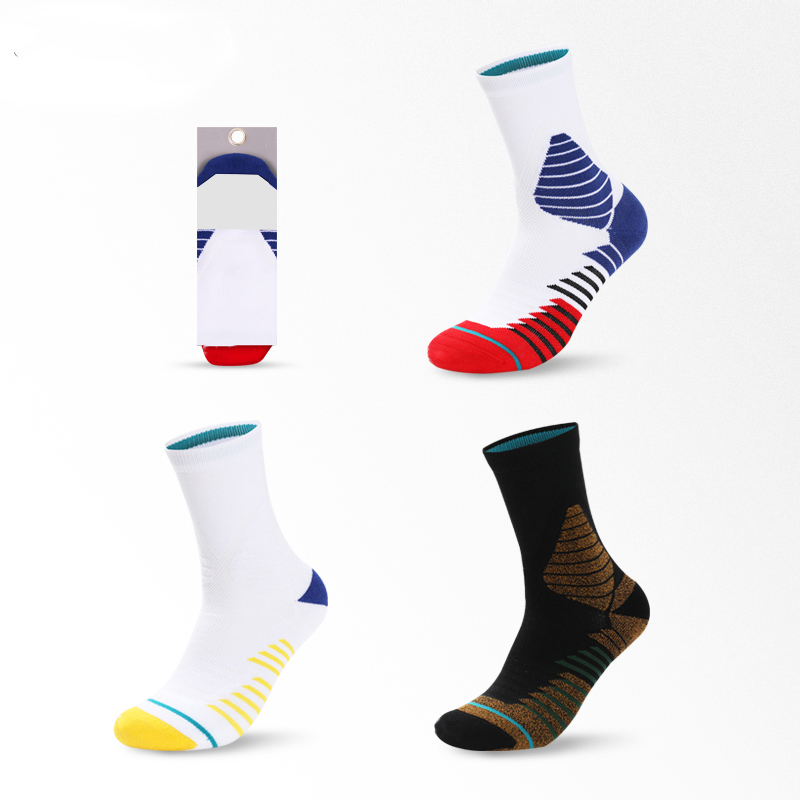 Basketball Quick-Dry Non-Slip Terry SocksBuilt with terry loops under the sole, quick-dry yarns, and elastic pressure at the foot, this basketball sock shows how fiber choice, cushioned structure, and a secure fit combine in a high-output design, as the surrounding discussion describes.View Product →
Fit, Cuff Pressure, and Footwear: The Rest of the Sweat Equation
Even the best fiber blend underperforms if the sock fits badly. A sock that is too large wrinkles under the foot, and every wrinkle is a friction ridge waiting for damp skin. A sock that is too small stretches the knit thin, collapses the terry loops, and presses fabric flat against the arch. Fit should follow foot length and arch height rather than a rough shoe-size guess — sizing logic for socks is not the same as for shoes, because elasticity does part of the fitting.
Cuff pressure deserves its own attention. Heavy sweaters often notice sock lines carved into the calf by evening; that constriction pinches circulation at the cuff edge and tends to make swelling worse over a long day. A wide, soft cuff with graduated elasticity holds the sock up without stringing the leg.
A quick self-test: if the ribbed mark on your calf is still clearly visible an hour after you take the socks off, the cuff is tighter than a sweaty foot will enjoy over a full day.
Footwear completes the equation. Mesh uppers and moisture-managing insoles multiply whatever the sock does; waterproof boots largely negate it, which is why boot wearers gain the most from wool and synthetic blends. Rotating two or more pairs of shoes so each one dries for a full day between wears, and swapping socks at midday on long shifts, cost nothing and reliably beat any single product change.
How a Sock Factory Judges Sweat Performance Before Shipping
Before any sock design ships, it goes through checks that map directly onto the problems sweaty feet cause. Incoming yarn is verified for composition and moisture behavior; knit density and loop height are measured on the machines so terry cushioning does not wash flat; finished socks run through repeated wash cycles to confirm the fit recovers instead of stretching out. Wear trials with test panels then answer the question lab equipment cannot: does the foot still feel dry at hour six?
Our own factory history shaped this focus. We began in December 2003 producing disposable aviation socks — a product where hygiene and moisture handling are non-negotiable, and every pair is judged by a passenger within minutes of being put on. Growing from 15,000 pairs a day to today's 80,000, here in Datang, Zhuji — a town that knits a large share of the world's socks — meant building quality control around comfort variables like these rather than treating them as afterthoughts. Our sister spinning company, Zhuji Wenxiong Knitting & Spinning, backs the yarn side of that work with more than a decade of production experience.
One design from our outdoor line shows how the pieces combine: a half-terry boat sock with a brushed inner face and small heel tabs, engineered so the looped zones manage moisture under the arch while the low-cut profile stays discreet in warm-weather shoes.
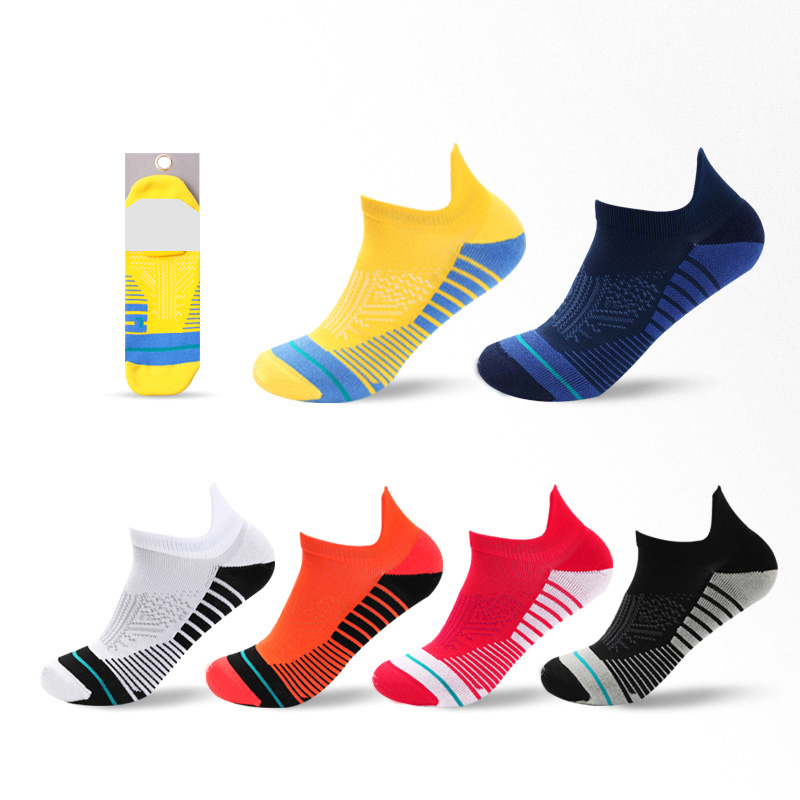 Brushed Half-Terry Boat Socks With Heel TabsA low-cut outdoor sock blending combed cotton and nylon, with half-terry cushioning under the arch, brushed inner face, mesh instep, and heel tabs — a compact example of how fiber, structure, and fit checkpoints come together in warm-weather footwear.View Product →
A Practical Checklist Before You Buy or Place an Order
Whether you are choosing a pair off a shelf or reviewing samples for a program, the same checkpoints apply. Work down the list in order — fiber first, structure second, fit last — because that is the sequence in which the sock will actually experience your day.
- Read the fiber label first. For sweaty feet, treat 100% cotton as a short-wear option and look for a wicking fiber — polyester, nylon, or wool — at 20% of the blend or more.
- Match the blend to the workload: cotton-forward blends for light days, synthetic- or wool-forward blends for sport, long shifts, and waterproof footwear.
- Check for terry loops under the sole if you walk or stand for hours; press a thumb into the loops and confirm they spring back instead of staying flat.
- Look for mesh or openwork panels across the instep — the escape route sweat actually uses inside a shoe.
- Pinch the cuff. It should resist gently and recover instantly; anything that leaves a deep ridge fails the all-day test.
- Feel the heel and toe for a smooth, low-profile closure — a bulky seam plus damp skin is a reliable blister recipe.
- Buy in rotation: five or more pairs per rotation lets every pair dry fully for 24 hours between wears.
- For custom programs, ask the factory for a wear-trial protocol — sample wear, wash cycles, and fit checks — before committing to a full production run.
Frequently Asked Questions
Are 100% cotton socks bad for sweaty feet?
For all-day wear and heavy sweating, effectively yes. Cotton absorbs sweat and holds it against the skin, which keeps feet damp, raises friction, and encourages odor and blisters. For a few hours in breathable shoes with light sweating, 100% cotton remains a reasonable and comfortable choice.
Is a cotton-rich blend still okay if I sweat a lot?
Usually, yes — if the cotton share drops far enough and the structure cooperates. Blends in the 40–60% cotton range with polyester and nylon, terry soles, and mesh instep panels keep much of cotton's feel while cutting dry-down time dramatically. At 70–80% cotton, you are mostly buying cotton's behavior with a small assist.
Cotton or polyester — which is better for sweaty feet?
Polyester dries faster and is the safer choice for sport, heat, and long days; cotton feels softer and stays comfortable for short, low-output wear. Most people with genuinely sweaty feet are happiest with a blend that uses polyester or nylon to move moisture and a smaller cotton share for comfort — or with wool, which buffers humidity while keeping the surface dry.
Do I need to size up when my feet swell during the day?
Choose size by foot length and let the knit's elasticity handle modest swelling; a sock half a size too big wrinkles and creates friction ridges on damp skin. If swelling is significant, look for a wide, soft cuff and a supportive but non-binding arch band, and consider consulting a foot health professional.
How often should I change socks if my feet sweat heavily?
Change at midday on long days, and let your feet air out for a few minutes before putting on a fresh pair. Keep a rotation so every pair dries completely between wears — a sock worn two days in a row never fully recovers its dryness, and neither does the shoe it sat in overnight.
Are bamboo socks better than cotton for sweaty feet?
Bamboo viscose feels smoother and dries somewhat faster than cotton, and many people with sweaty feet prefer it in warm weather. It is still an absorbent fiber, though, so it improves on cotton rather than solving the problem; blends with wicking synthetics remain the stronger option for heavy sweating.
Can the right sock fix foot odor, or is that a shoe problem?
Both sides matter. The sock decides how long sweat sits against your skin, which controls bacterial growth at the source; the shoe decides how fast everything dries between wears. A wicking sock inside a damp shoe only halves the problem, so rotate your shoes, dry them fully, and treat the sock and the shoe as one system.

 English
 Español