Why Your Old Gym Socks Don’t Cut It for Cycling
While many beginners focus on the bike or the jersey, the connection between your foot and the pedal is where the magic happens. Cycling Socks are not just a fashion statement; they are a technical layer designed to solve the specific problems created by the high-pressure, high-repetition environment of a cycling shoe. Unlike standard athletic socks, which are often too bulky or absorbent, Cycling Socks act as a precision interface that ensures every watt of energy is transferred efficiently while keeping your feet comfortable and dry.
The Anatomy of a High-Performance Cycling Sock
If you’ve ever felt a burning sensation on the ball of your foot (often called "hot foot") or dealt with annoying slippage mid-climb, your socks are likely the culprit. Standard gym socks are typically made of cotton or thick loops of fabric. On a bike, these materials trap heat and moisture, causing the foot to swell and rub against the stiff interior of a cycling shoe.
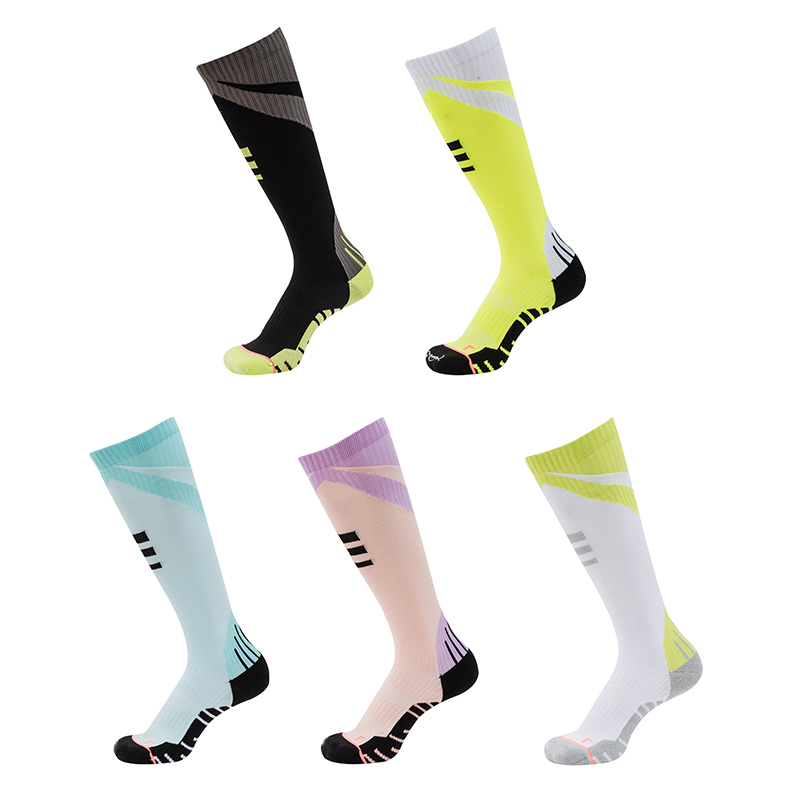
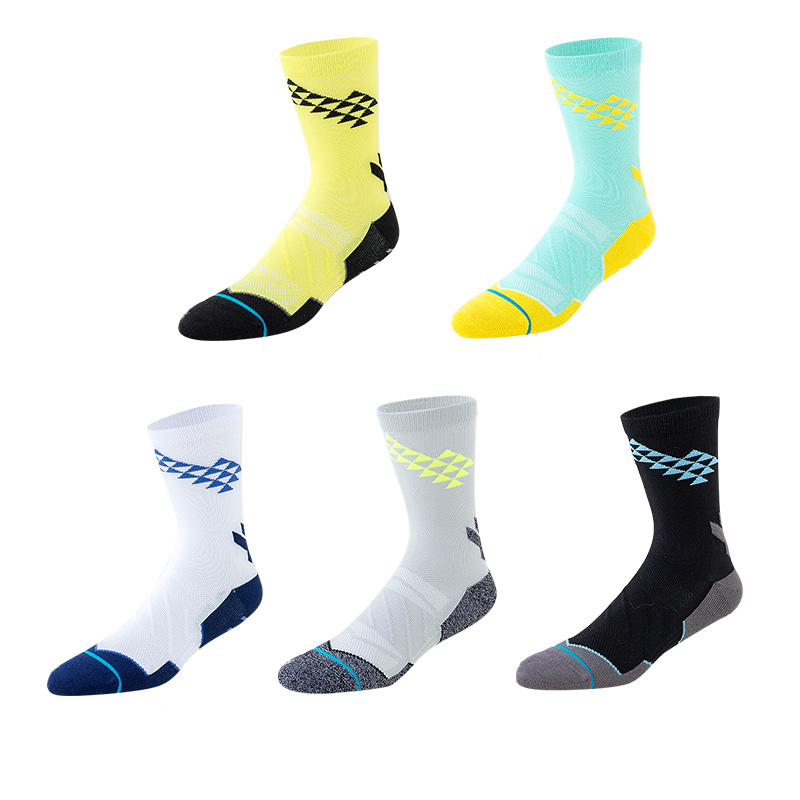
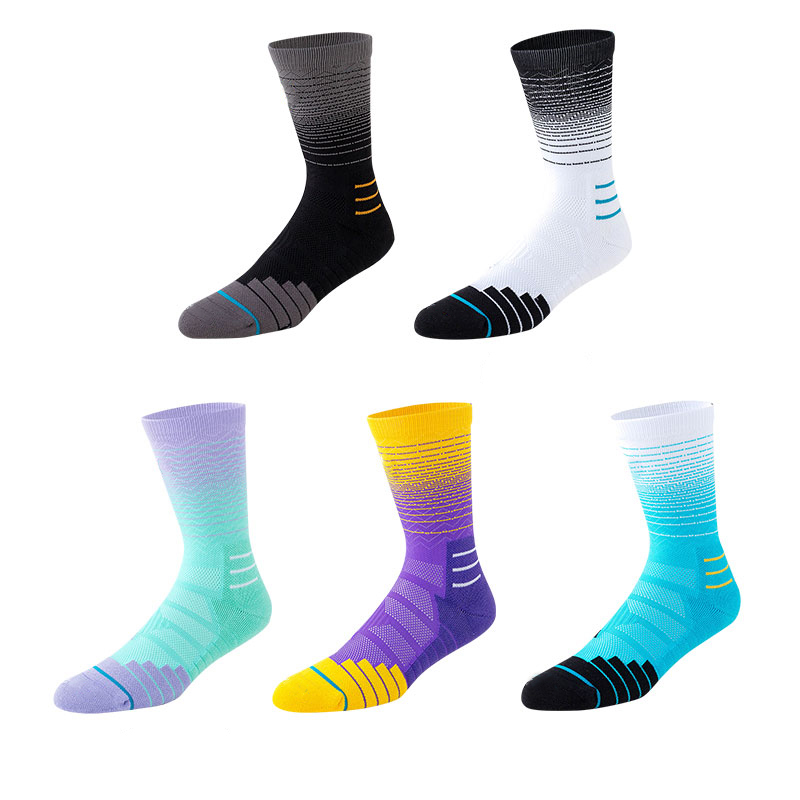
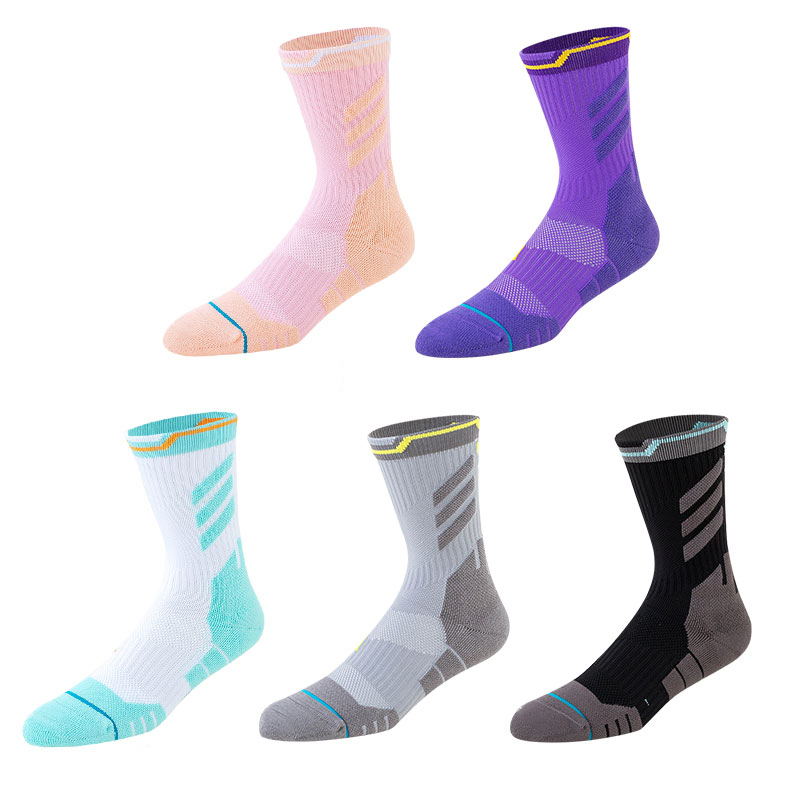
Cycling Socks utilize a "second-skin" fit. By using a much thinner profile and a higher needle-count weave, they eliminate the bunching that leads to blisters. They are designed to stay in place for thousands of revolutions, providing a consistent feel that doesn't change as you sweat. The construction typically features:
- The Cuff: Engineered with high-stretch elastic to stay mid-calf without sliding down, even during intense sprints.
- The Mid-Foot Band: Often features a 360-degree compression band around the arch to prevent the sock from twisting inside the shoe.
- The Upper Mesh: A ventilated weave on the top of the foot that aligns with the vents in your cycling shoes to allow heat to escape.
- The Reinforced Heel: Extra durability in high-wear areas without adding unnecessary bulk.
Technical Comparison: Cycling Socks vs. Standard Athletic Socks
| Feature |
Cycling Socks |
Standard Athletic Socks |
| Material Composition |
Synthetic (Nylon/Elastane) or Merino Wool |
Primarily Cotton or Heavy Polyester |
| Fabric Thickness |
Ultra-thin to Mid-weight |
Thick/Cushioned |
| Moisture Management |
Hydrophobic (Wicks and evaporates) |
Hydrophilic (Absorbs and holds) |
| Fit Profile |
Compression-fit / Anatomical |
Loose / General Shape |
| Toe Seams |
Flat-stitched or Seamless |
Protruding Seams |
| Durability |
High-density weave for friction resistance |
Subject to thinning and "bagging out" |
Key Materials: What are Cycling Socks Made Of?
When choosing Cycling Socks, the material selection directly determines the riding experience. Because cycling shoes often have limited space and extremely high ventilation requirements, the fabric must balance moisture-wicking, temperature control, and durability within an extremely thin profile.
Synthetic Fibers: The Foundation of Performance
Most high-performance Cycling Socks are made from a blend of synthetic fibers:
- Nylon: Provides excellent abrasion resistance, ensuring the socks are durable in high-friction areas like the heel and toes.
- Elastane/Spandex: Gives Cycling Socks a tight, supportive wrap, ensuring they do not shift or wrinkle during long periods of pedaling.
- Polyester: Enhances moisture-wicking speed, allowing sweat to be quickly conducted to the surface of the sock for evaporation.
Merino Wool: The Natural All-Weather Choice
Premium Cycling Socks often incorporate Merino wool, not for thickness, but for its natural properties:
- Temperature Regulation: Keeps feet warm in winter and cool in summer, maintaining a constant temperature even when wet.
- Natural Odor Resistance: Merino fibers have natural antibacterial properties, making them ideal for multi-day long-distance rides.
Why You Must Avoid Pure Cotton
For cyclists, cotton is a "forbidden zone." Cotton acts like a sponge, absorbing and locking in sweat. This causes Cycling Socks to become heavy, soft, and lose their shape, which leads to cold feet and is the primary cause of blisters.
Material Comparison: Performance Impact on Cycling Socks
| Performance Metric |
Synthetics (Nylon/Polyester Blend) |
Merino Wool |
Cotton (Not Recommended) |
| Wicking Speed |
Extremely Fast |
Fast |
Extremely Slow |
| Breathability |
Excellent |
Good |
Poor (Lost when wet) |
| Shape Retention |
Excellent (High Elasticity) |
Good |
Poor (Stretches when wet) |
| Odor Resistance |
Average (Requires treatment) |
Excellent (Natural) |
Poor |
| Durability |
Extremely High |
Moderate |
Average |
| Ideal Environment |
Racing / Summer |
Endurance / All Seasons |
Short Commutes Only |
Essential Features to Look For
Length and Seasonality: From Aerodynamics to Protection
In the cycling world, the length and thickness of Cycling Socks are precise adjustments based on aerodynamic needs and climate changes.
Cuff Height: Aero Performance and Style
Mid-high Cycling Socks (usually 12-18 cm) have become the mainstream standard. Beyond aesthetics, taller socks cover more skin. Professional Aero Cycling Socks use special textured weaves to guide airflow over the ankles, reducing drag.
- Low/No-Show: Rarely seen now, used only for extreme heat dissipation.
- Mid-Cuff (Standard): Classic style providing basic muscle support.
- Tall/Aero: The competitive choice. Research shows that at 40km/h, aerodynamic Cycling Socks can save approximately 3-8 watts, offering better value than expensive carbon wheel upgrades.
Seasonal Differences: Summer Heat vs. Winter Warmth
Because cycling shoes are designed to be tight for power transfer, sock thickness must change with the season.
- Summer Version: Uses ultra-thin mesh, focusing on breathability at the bridge of the foot to prevent swelling from heat.
- Winter Version: Increases Merino wool content and uses hollow-core fibers to trap body heat. Some premium Cycling Socks include windproof panels or waterproof membranes.
Scenario-Based Parameter Comparison
| Riding Scenario |
Recommended Height |
Fabric Thickness |
Key Tech Requirement |
Benefit |
| Time Trial/Road Race |
Tall (18cm+) |
Ultra-light |
Trip Line Texturing |
3-10W Power Saving |
| Summer Training |
Mid/Tall (15cm) |
Thin Mesh |
Arch Support + Ventilation |
Max Cooling |
| Winter Riding |
Tall (18cm+) |
Thermal |
Merino + Reinforced Toes |
Heat Retention |
| Off-Road/Gravel |
Mid (12-15cm) |
Medium |
Abrasion Resistance |
Debris Protection |
FAQ
- Why are professional Cycling Socks so tight? The compression promotes blood circulation and reduces swelling during long rides. A tight fit also ensures the sock moves in sync with your foot, preventing friction heat.
- Do Aero Cycling Socks really work? For casual riders, the speed gain is minimal. However, in a competitive environment, they are one of the most cost-effective "marginal gains" available.
- How do I know if my Cycling Socks are too long? UCI regulations state socks cannot exceed half the distance between the ankle and the knee. For recreational riders, as long as they don't slide down or restrict the knee, they are fine.
- Are there left and right specific Cycling Socks? Most high-performance models are ergonomically designed with "L" and "R" labels to ensure the arch support and toe box fit the foot's shape perfectly.
- How should I wash them to make them last? Wash them inside out in cold water and avoid the dryer to preserve the elastic fibers and technical fabric integrity.
- How tight should my cycling socks be? They should fit like a second skin—snug enough that there are no wrinkles, but not so tight that they restrict circulation to your toes.
- Do cycling socks actually make you faster? Specific "Aero" versions can save a few watts at high speeds, but for most, the speed benefit comes from the comfort that allows you to pedal longer without distraction.
- Why are cycling socks so thin? Cycling shoes are designed to fit very closely to maximize power transfer. Thick socks can cause "hot spots" by making the shoe too tight.

 English
 Español